US sanctions hit 41 companies accused of keeping Prince Group’s scam network running
Quick Take
- OFAC sanctioned four people and 41 entities on November 5 for supporting Prince Group's business network.
- Treasury says offshore ownership structures and business services helped Prince Group sustain operations after earlier sanctions.
- US blocking rules also cover entities owned at least 50% by blocked persons, including aggregated holdings.

The US sanctioned four people and 41 entities on November 5, 2026, targeting a corporate network that Treasury says sustained Prince Group's operations after earlier sanctions. The designations subject covered assets to US blocking and reporting requirements, with restrictions also reaching companies that meet OFAC's ownership threshold.
The Office of Foreign Assets Control (OFAC) said the network helped Prince Group, which it has designated a transnational criminal organization, manage offshore structures, conceal beneficial ownership and maintain commercial activities. It links the group's affiliates to digital asset investment scams, romance scams and other online fraud, with many operations relying on trafficked and coerced workers in Southeast Asian compounds.
The action follows earlier Prince Group sanctions on October 14, 2025 and June 23, 2026. The newly sanctioned individuals are Qiu Yong, Zhao Mengyao, He Yujing and Visal Pang, according to the OFAC designation record.
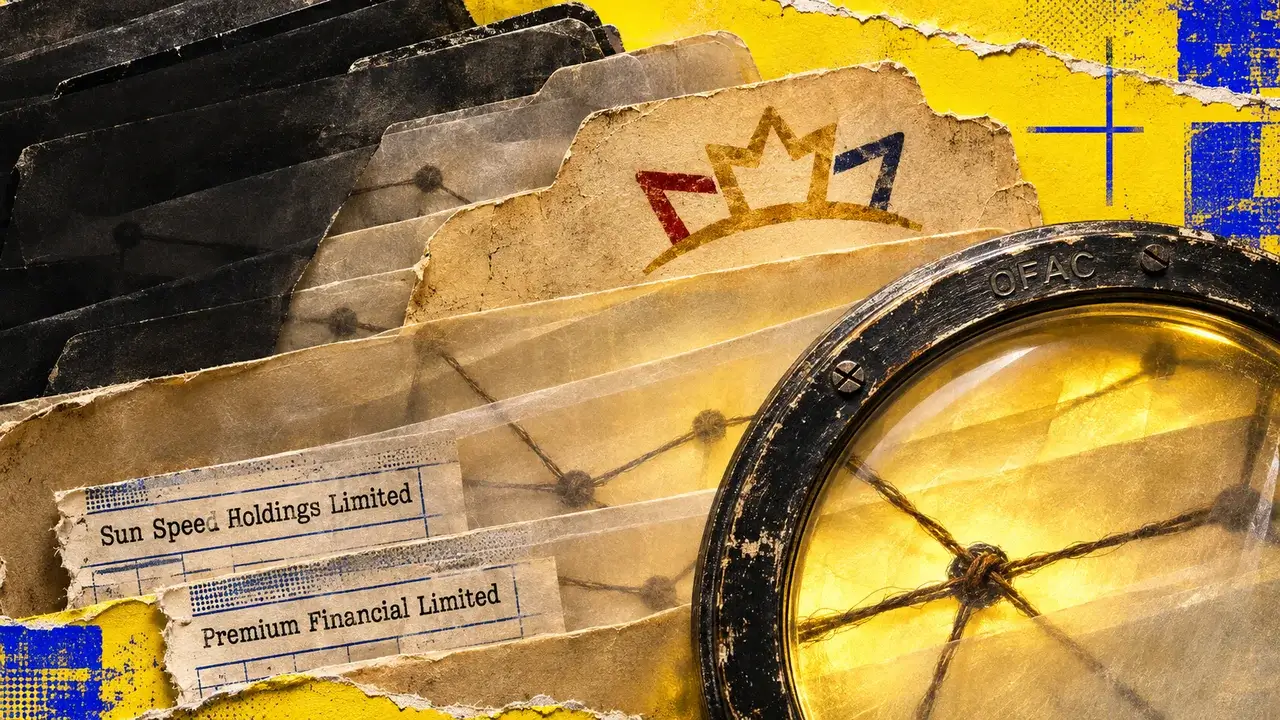
One chain runs from Qiu Yong through Sun Speed Holdings Limited, registered in the British Virgin Islands, to Hong Kong money lender Premium Financial Limited. Treasury says Qiu ultimately owns the lender and controls other BVI and Hong Kong companies on Prince Group's behalf.
Zhao serves as Qiu's personal assistant and as secretary and co-director of several Hong Kong companies he ultimately controls, Treasury said.
How ownership shapes the reach of Prince Group sanctions
Treasury traces Qiu Yong's ownership through an offshore company to a Hong Kong lender. Explore how US blocking obligations apply.
Explore the blocking rules
Designated property in the United States or US persons' possession or control is blocked and reportable to OFAC.
The named target and the ownership path both matter when assessing sanctions exposure.
The ownership diagram is a selected path within the larger network. Transaction prohibitions retain general or specific OFAC license and exemption qualifications and their stated US jurisdictional scope.
Sources
Supporting facts
- Treasury says Qiu Yong ultimately owns Hong Kong money lender Premium Financial Limited through British Virgin Islands-registered Sun Speed Holdings Limited, and controls other BVI and Hong Kong companies on Prince Group's behalf. [1] [2]
- The November 5 designations subject designated persons' property and interests in property in the United States or US persons' possession or control to blocking and reporting to OFAC. [1]
- Entities owned directly or indirectly, individually or in the aggregate, 50 percent or more by one or more blocked persons are also blocked under the ownership rule described by Treasury. [1]
- Unless OFAC licenses a transaction or an exemption applies, US persons and transactions within or transiting the United States generally may not deal in property or interests in property of designated or otherwise blocked persons. [1]
Method
Map Treasury's reported ownership chain with directional connectors, without imputing share percentages to that chain. A separate selectable panel explains the standing 50 Percent Rule and covered-property obligations from the same announcement.
Scope
The ownership diagram is a selected path within the larger network. Transaction prohibitions retain general or specific OFAC license and exemption qualifications and their stated US jurisdictional scope.
 CryptoSlate
Treasury also targeted He Yujing, the wife of Prince Group executive Chen Bo, and Pang. Treasury says Chen transferred ownership of a Tokyo mansion to He after the October 2025 sanctions action. It says Pang controls 11 Cambodian companies, several co-directed with Chen, whose own US designation came on June 23, 2026.
The November action also names companies linked to previously sanctioned Prince Group executives Dai An and Thet Li. Treasury says Singapore-based Greenbay Multi Media is wholly owned by Thet Li.
What the Prince Group sanctions require
Designated persons' property and interests in property in the United States, or in US persons' possession or control, are blocked and must be reported to OFAC.
The standing ownership rule also blocks entities owned 50% or more, directly or indirectly and individually or in the aggregate, by one or more blocked persons. That makes the ownership chain relevant alongside the names on the sanctions list.
Unless a general or specific OFAC license authorizes a transaction, or an exemption applies, transactions involving designated or otherwise blocked property are generally prohibited for US persons or within or transiting the United States. Treasury says violations can bring civil or criminal penalties, with civil penalties possible on a strict liability basis.
For counterparties assessing exposure, OFAC's guidance calls for ownership due diligence on entities involved in transactions and account relationships.
Editorial credits

Also known as "Akiba," Liam Wright is a reporter, podcast producer, and Editor-in-Chief at CryptoSlate. He believes that decentralized technology has the potential to make…