Here's how much bitcoin and the S&P 500 could rally after midterms
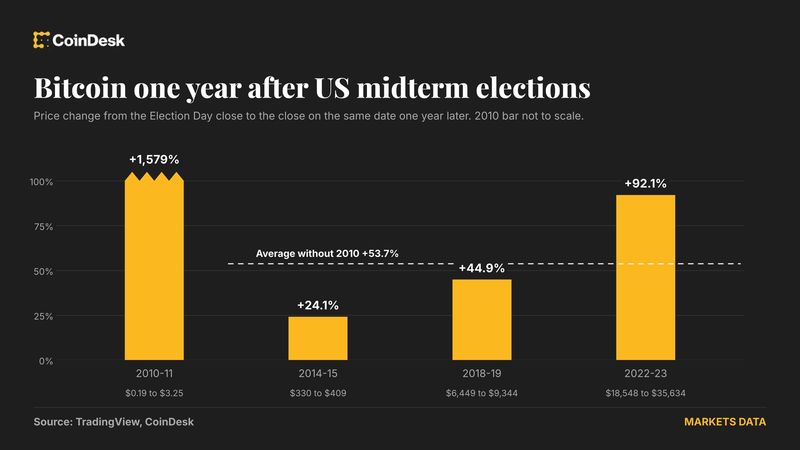
Bitcoin tends to move in cycles of roughly four years, built around the mining reward halving, an inbuilt code in the Bitcoin blockchain that reduces the per block BTC produced and given to miners by 50% every four years.
After each of the four halvings to date, BTC rallied sharply, peaked 12 to 18 months later and then sliding into a bear market. Those bear markets played out in midterm years – 2014, 2018, 2022 and now 2026. So the rebound that followed the midterms may have been a fresh cycle start rather than politics at work.
S&P 500 has a long bullish history
The S&P 500 has a much longer record, and it also points up, a positive sign for bitcoin and other risk assets.
Since 1950, the index has averaged a 15.17% gain in the year after midterms, against 7.30% in all other years, according to Hartford Funds.

What’s at stake this time
The 2026 elections could change how President Donald Trump operates in his final two years in the White House.
If Democrats win one or both chambers of Congress, the politics over the record federal debt may heat up, as the debt limit issue is still unresolved and talks over the same may complicate. Trump’s push for $350 billion in mandatory defense funding may not stand a chance, according to Brookings. Democrats could use legislative hurdles to arrest funding for Middle East escalations.