Bitcoin monthly ‘new money’ inflows near $5B as BTC price rally stalls


 Written by William Subergstaff writerEdited by Charles Bennettstaff editor
Bitcoin’s realized cap rise in the 30 days to Oct. 5 came mostly from existing holders, not fresh capital, Glassnode data showed.
Bitcoin (BTC) price gains do not yet reflect enough new capital entering the market, analysis warns.
Key points:
- Rolling 30-day cumulative inflows of “new money” to Bitcoin reached $4.9 billion on Oct. 5, per Glassnode data.
- Existing investors still accounted for three-fifths of the $12.8 billion growth in realized cap in that period.
- Short-term holders accounted for more than 80% of profit-taking above $85,000.
Bitcoin capital inflows not responsible for realized cap growth
In the latest edition of its regular newsletter, The Week Onchain, crypto research platform Glassnode revealed that existing holders were behind much of Bitcoin’s recent upside.
“New money” inflows into Bitcoin — purchases by corporate treasuries, “stablecoin growth” and inflows to the US spot Bitcoin exchange-traded funds (ETFs) — totaled around $4.9 billion in the 30 days to Oct. 5.
Bitcoin’s realized cap, which values each coin at the price it last moved onchain, grew by $12.8 billion, more than twice as much over the same period.
“New money therefore covers less than two fifths of that rise. The rest is coins changing hands at higher prices among money already in the market,” Glassnode commented.
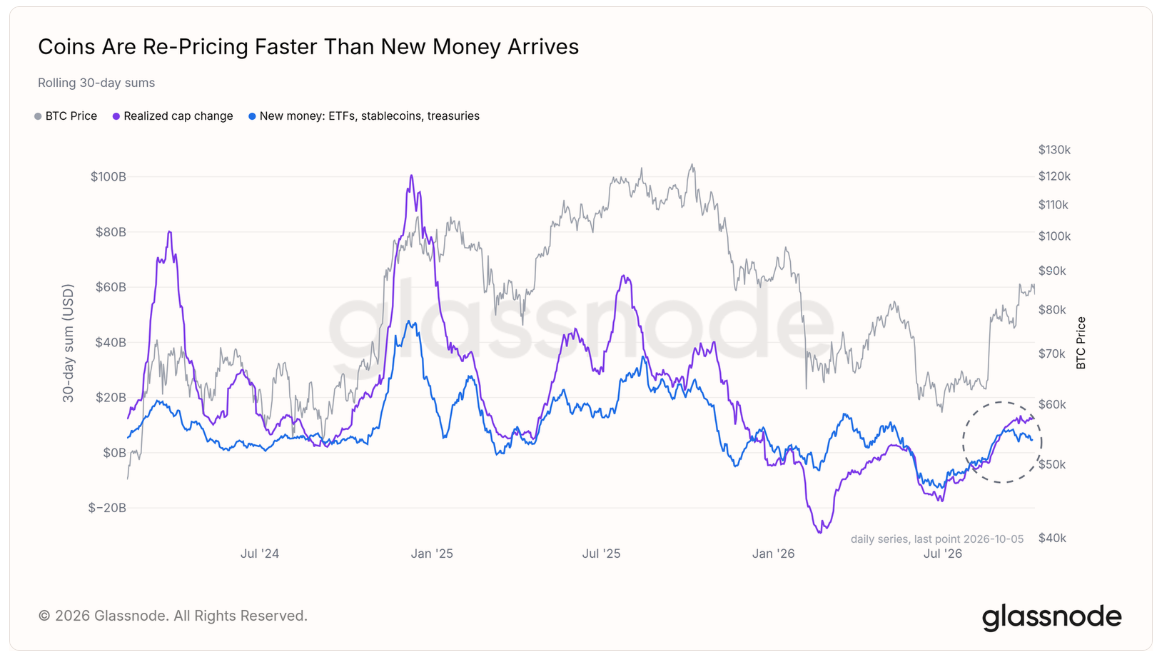
Bitcoin new money inflows vs. realized cap (screenshot). Source: Glassnode
Accompanying data shows that recent rallies in BTC/USD have showed the same divergence since the ETFs launched in January 2024. Currently, however, conditions are different, with inflows still modest compared to short-term realized-cap gains.
“The rallies of 2024 and 2025 showed a similar mix, but on far larger inflows,” Glassnode added.
“Until those inflows pick up, the move depends on existing holders paying more.”
Newer investor profit-taking surged at $85,000
Since Sept. 21, Bitcoin has attempted to rise beyond $87,000 four times. Each of these attempts failed as buyers faced thickening overhead ask liquidity on exchange order books. BTC/USD circled $83,000 at the time of writing on Thursday, down 1% month-to-date.
Related: Bitcoin price drops to $82.7K October low as bond sell-off resumes on Iran nerves
Continuing, Glassnode flagged increased profit-taking among recent buyers over the weekend, when Bitcoin saw its first weekly close above $85,000 since January.
“Of all the coins sent to exchanges that day, about 86% came from short-term holders, those holding for less than 155 days, moving coins at a profit. That is the highest share of any day in the past year; on a typical day it is under two fifths,” it continued.
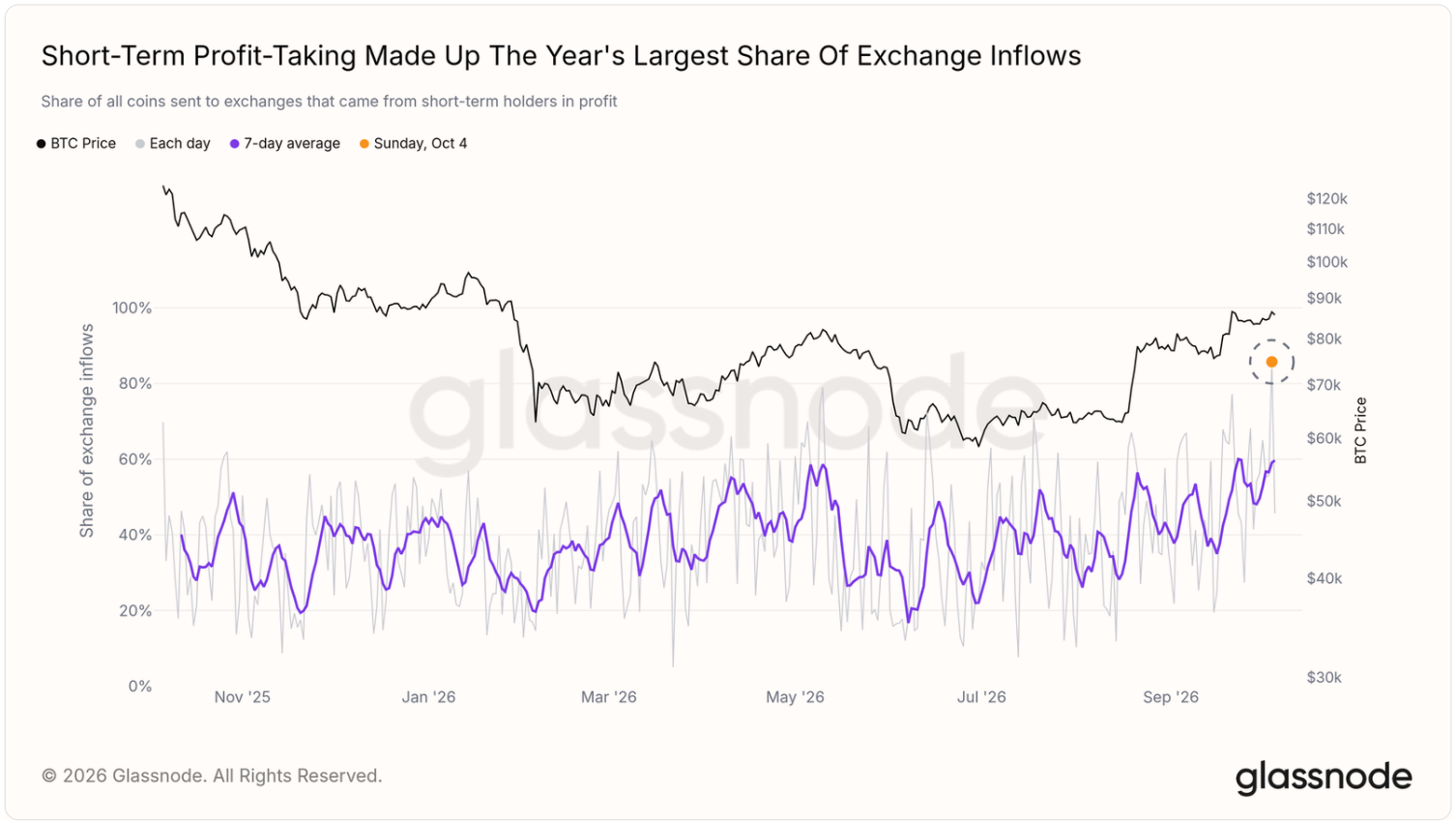
Bitcoin STH profit-taking data (screenshot). Source: Glassnode
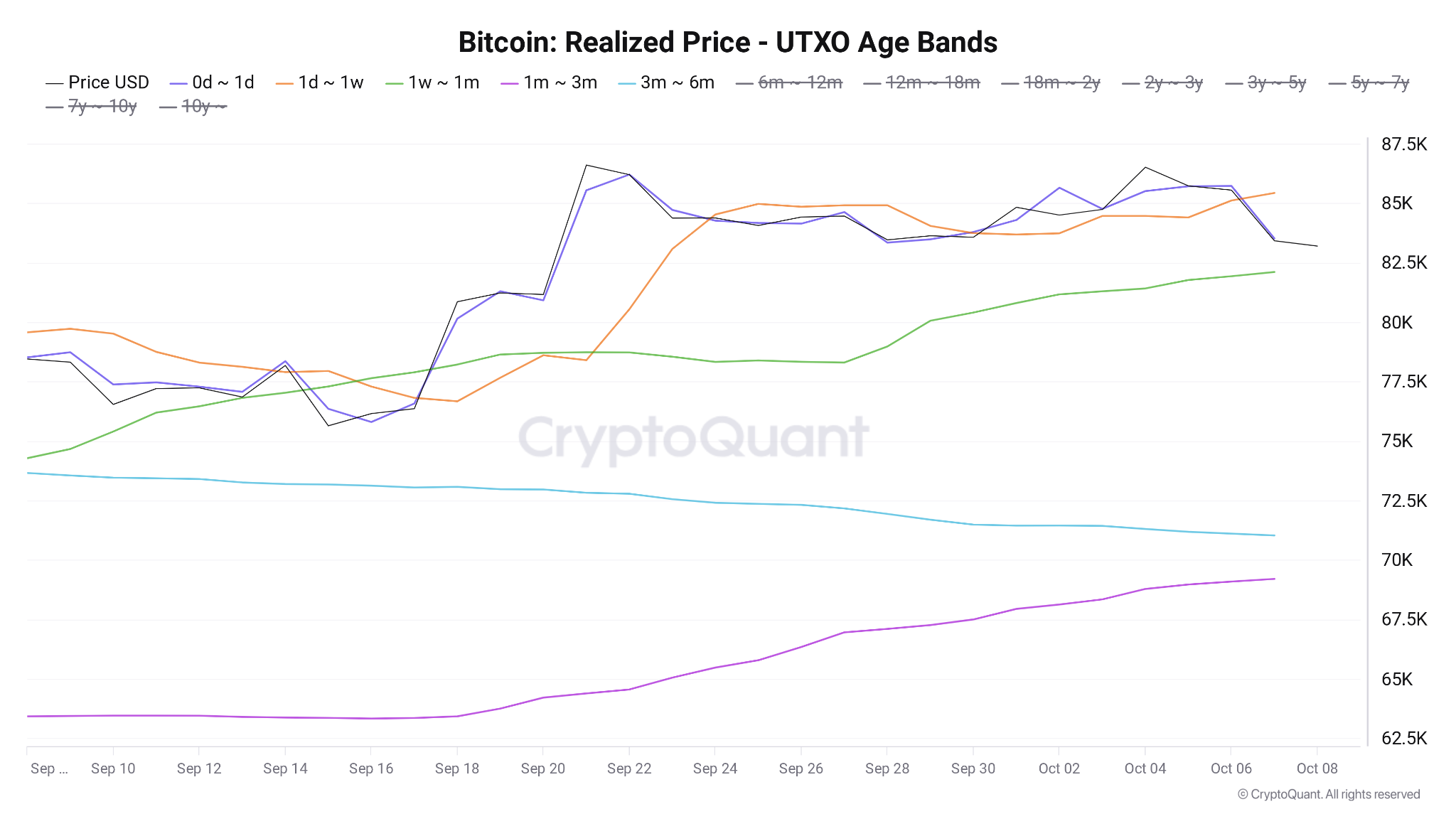
Short-term holders are traditionally considered to be more sensitive to price volatility. The cohort remains in net profit, with its aggregate cost basis, also known as realized price, still at around $78,250 as of Oct. 7, per data from CryptoQuant.