Why bitcoin is down 'just' 32% a year after its record high of $126,000
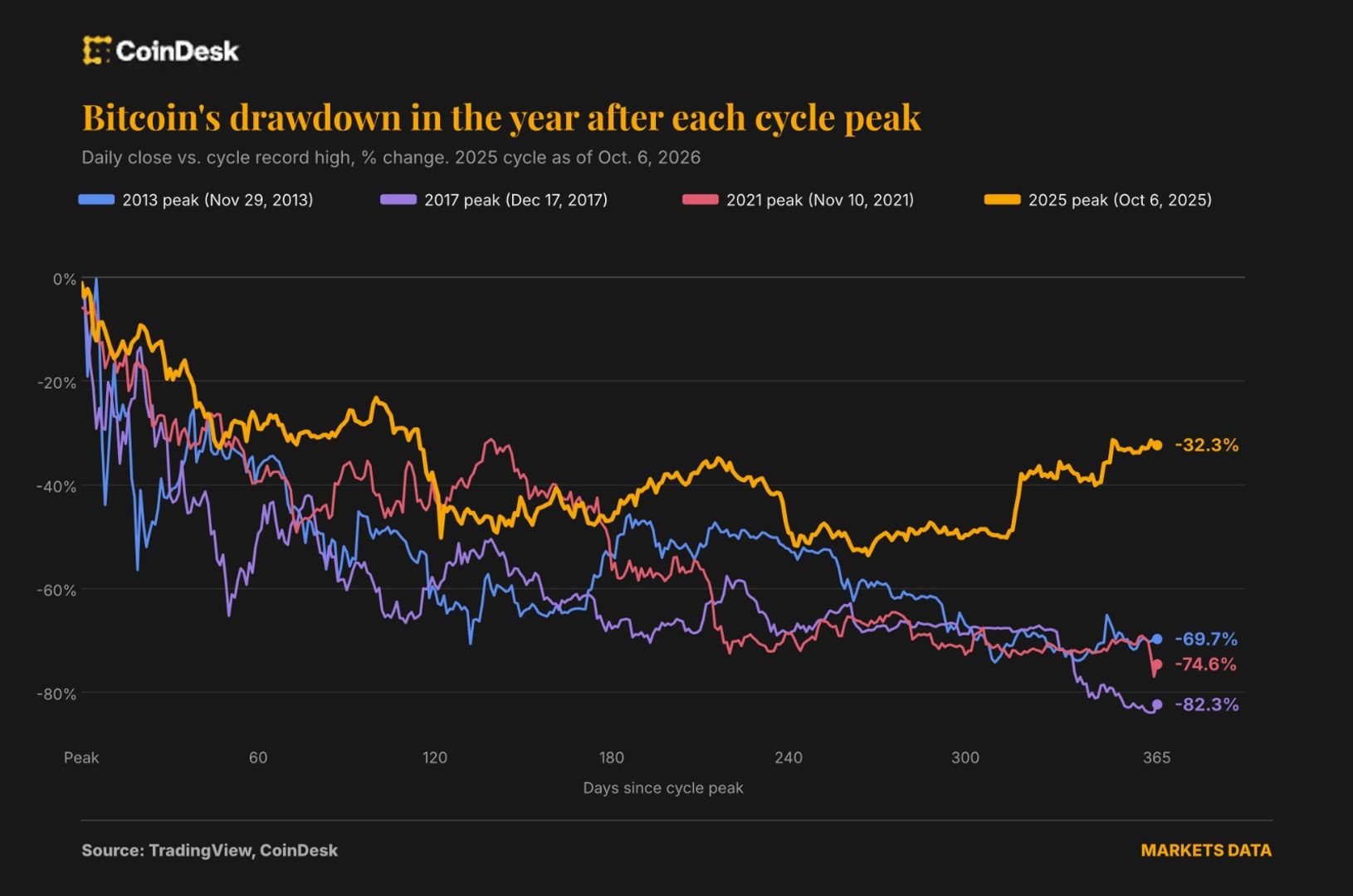
“The most notable changes are the significantly shortened duration of the drawdown and the reduced time spent at the bottom," Tim Sun, senior researcher at HashKey Group, told CoinDesk.
Market participants changed
The main reason previous bear markets saw prices fall much lower and for longer is who drove the preceding bull runs. Retail traders and their use of leverage often fueled those rallies, which frequently ended in crashes marked by fund blowups and exchange failures, as seen in 2022.
The 2023–25 uptrend, by contrast, was driven by institutional inflows through regulated investment vehicles such as ETFs, while the subsequent downturn reflected a macro-led reversal of those flows.
"While previous cycles were driven primarily by retail investors and leverage, buyers in this current cycle increasingly stem from outside the crypto market, including ETFs, asset management giants, family offices, and even corporations. This growing demand for external asset allocation is the core driving force behind these shifts," Sun said.
The recent downturn was not entirely driven by "black swan" events, according to Sun; rather, it was largely caused by capital outflows resulting from changes in the external macroeconomic environment and asset allocation landscape.
"Consequently, despite undergoing significant adjustments, the market did not trigger the persistent negative feedback loops seen in the past," he noted.