UK to test whether AI can replace a second mammogram reader in trial of 660,000 women
Quick Take
- Women in Cambridgeshire are the first to join EDITH, a UK trial of AI-assisted mammogram reading.
- One trial arm puts AI in the second-reader slot, while another uses AI to guide how many experts read the images.
- Researchers will compare cancer detection and callback rates and track how much work each approach requires from screening teams.

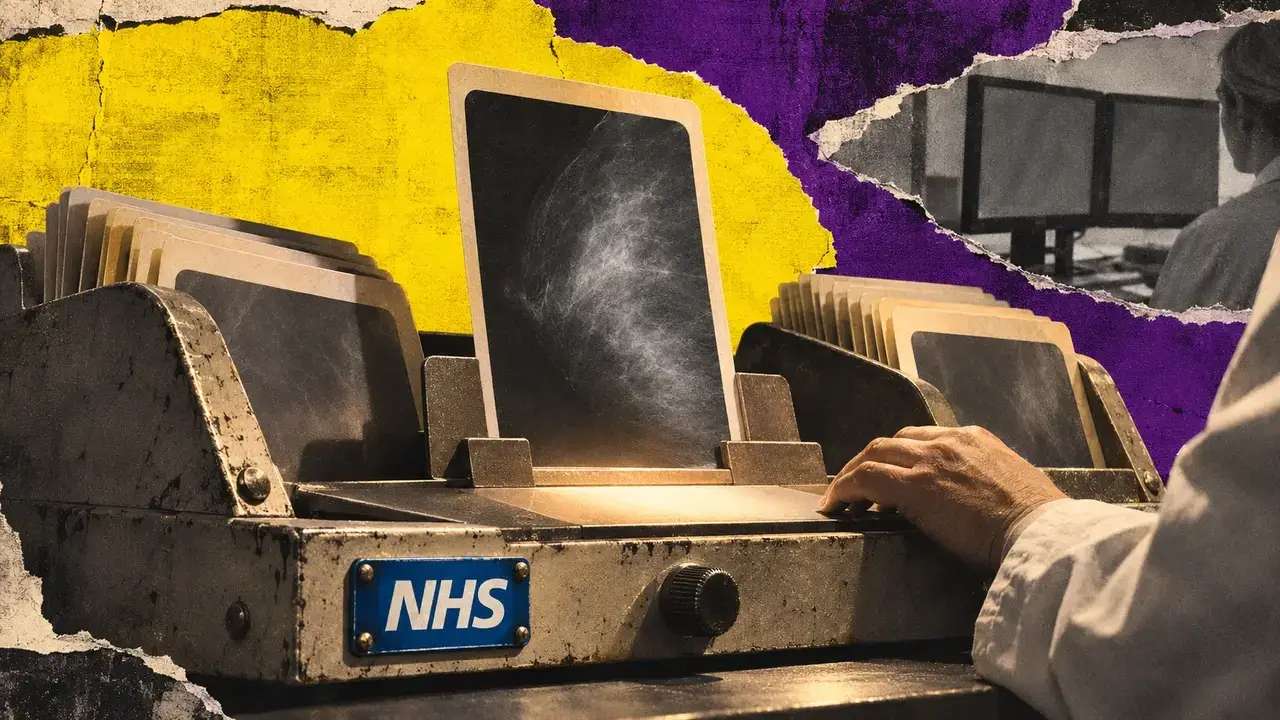
Women in Cambridgeshire are the first to join a UK trial testing whether AI can take on the second check of a screening mammogram.
The study will compare two AI approaches with the usual two-reader process, and researchers will measure how many cancers each approach detects and how often women are called back for further tests.
NIHR Cambridge reported the first enrollments on Nov. 23. The study, known as EDITH, aims to enroll 660,000 women across about 30 UK breast screening centers, according to the ISRCTN trial registry.
Eligible women receive information about the trial and how to opt out with their screening invitation. The appointment itself proceeds as usual, and every mammogram in the trial still gets at least one human read.
EDITH randomly assigns clinic days to one of three approaches, and each participating center uses all three. Under standard screening, two NHS experts read the images. In one trial arm, an expert reads the mammogram first, then AI checks for signs of cancer the expert may have missed.
In the other AI arm, the software assesses the images first, and one NHS expert reads mammograms the tool rates as low likelihood for cancer, and two read those it rates as high likelihood.
A very high score or a disagreement about whether to call a woman back sends the case for an additional human review. Across all three groups, at least two human experts make final decisions about cancer detection.
Who reads a mammogram in the EDITH trial?
The trial compares two AI workflows with standard double reading. In the AI-first workflow, the tool scores how likely the images are to show cancer.
Every mammogram gets at least one human read. At least two human experts make final decisions about cancer detection.
The diagram shows the trial’s assigned reading steps. Researchers will use cancer detection and callback rates to compare the approaches.
Sources
Supporting facts
- EDITH randomises by clinic day, and participating centres use all three reading pathways. The control uses two NHS screening experts, as in standard practice. [1]
- One EDITH arm tests AI in the second-reader slot after an NHS expert has read the images. The tool looks for signs the expert may have missed. [1]
- In EDITH's triage arm, AI assesses the images first. One NHS expert reads images the tool classifies as low likelihood for cancer, and two read images classified as high likelihood. Very-high AI scores go to human arbitration. [1]
- Every mammogram in EDITH receives at least one human read, and final decisions about cancer detection involve at least two human experts. In the AI triage pathway, disagreements over whether to recall a woman go to human arbitration. [2] [1]
- EDITH compares each AI arm separately with standard double reading. Its two primary outcomes are the share of screened women whose cancer is detected and the share called back for additional tests. [1]
Method
The three lanes map the assigned screening pathways in the registered EDITH study design. The branch in the triage arm shows how AI-assessed likelihood determines the number of initial human reads.
Scope
The diagram shows the trial’s assigned reading steps. Researchers will use cancer detection and callback rates to compare the approaches.
 CryptoSlate
What the AI trial will measure
Researchers will compare each AI approach separately with standard double reading.
The registered study design treats at least one additional cancer detected per 1,000 women screened as a meaningful gain. For recalls, it sets a comparison margin of up to two extra callbacks per 1,000 women screened relative to standard double reading.
Both rates are calculated across all women screened.
The two rates capture different steps in screening, and staff counts a callback when they ask a woman to return for more tests. The cancer detection rate counts cancers found during the screening episode.
Researchers will count how many readings staff carry out, how many cases need an extra expert review, and how many women are called back for assessment. The study will also track cancers found between screening rounds.
NIHR Cambridge says the NHS would change routine screening only if the evidence shows the new approach is as safe and effective as the care women receive today.
Editorial credits

Also known as "Akiba," Liam Wright is a reporter, podcast producer, and Editor-in-Chief at CryptoSlate. He believes that decentralized technology has the potential to make…

Gino Matos is a law school graduate and a seasoned journalist with six years of experience in the crypto industry. His expertise primarily focuses on the Brazilian blockchain…