Trezor patches crypto wallet spy chips but warns users a new device may not be enough
Quick Take
- Trezor patched malicious spy implants in its hardware wallets and cut its reseller network by 80% following a major supply-chain security scare.
- The implants could secretly capture recovery phrases and transmit them to attackers, potentially exposing crypto holdings even on genuine devices.
- The firmware fix cannot invalidate previously exposed recovery phrases, forcing affected customers to create new wallets and transfer their funds.

Hardware wallet maker Trezor has slashed its reseller network by about 80% after discovering malicious implants that can steal cryptocurrency recovery phrases from devices sold through a third-party distributor.
The company confirmed on Nov. 12 that three Trezor Safe 5 wallets purchased from Southeast Asian reseller CryptoBilis contained hidden electronic components designed to capture sensitive information and transmit it to attackers.
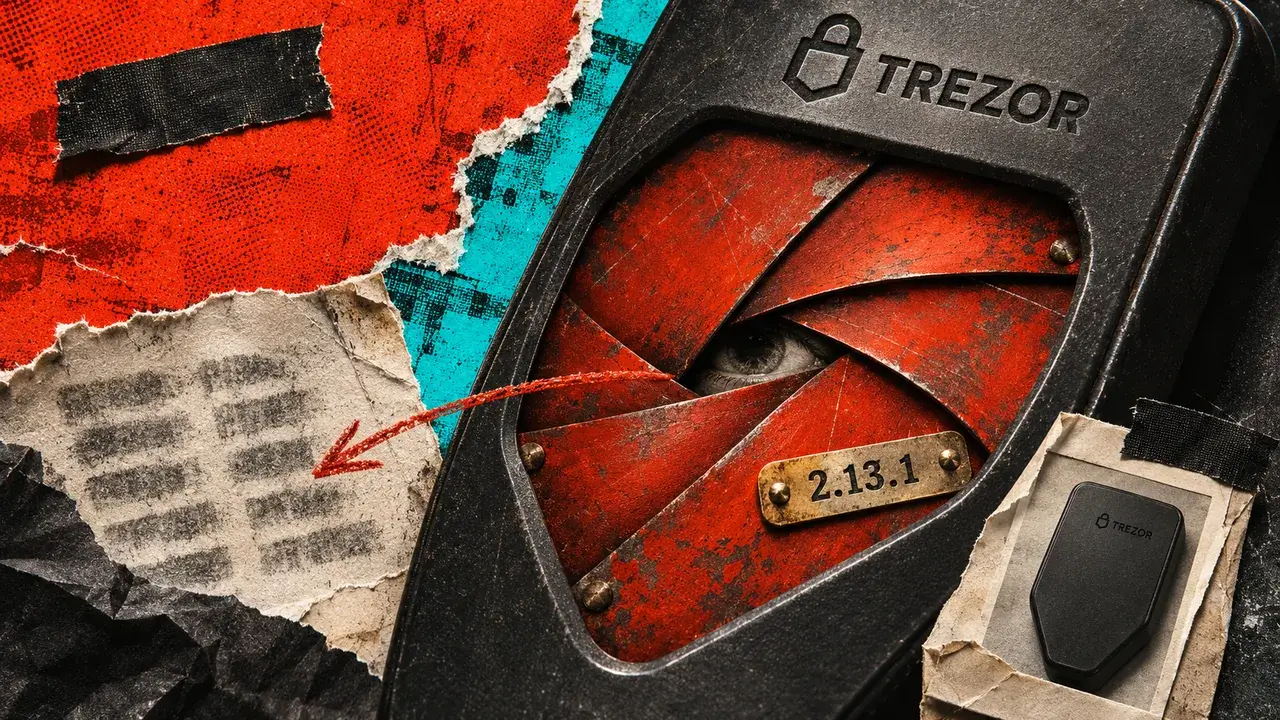
Trezor also released firmware version 2.13.1 on Nov. 11 to disable the identified implants, although it warned that customers whose recovery phrases may have been exposed must still transfer their assets to newly created wallets.
The findings follow an October supply-chain security incident involving CryptoBilis and Ledger hardware wallets, which investigators linked to cryptocurrency thefts exceeding $86 million.
Blockchain analytics firm Bitquery subsequently traced approximately $102 million in losses across 335 wallets on six blockchains. Ledger confirmed finding a malicious hardware implant in a customer's device, although investigators have not established that the implant caused every reported loss.
The incidents exposed vulnerabilities in hardware-wallet distribution, where attackers can modify genuine devices before customers receive them.
Trezor reveals how attackers bypassed hardware wallet protections
Trezor identified three compromised Safe 5 devices purchased between Aug. 20 and Sept. 23 through CryptoBilis's Tokopedia and Shopee storefronts and direct sales.
Its security team physically examined one device and identified the other two through photographs supplied by their owners.
The attackers installed an additional circuit board between the wallet's main board and display, allowing the implant to monitor information shown on the screen without modifying the firmware or Secure Element.
Blocking the implant does not revoke the seed
Trezor’s defense stops the implants it identified from capturing more data. A backup captured earlier creates a separate recovery problem.
Where does each defense act?
Trezor says 2.13.1 blocks the identified implants on devices running it. An earlier seed copy remains a separate risk.
For buyers covered by Trezor’s warning, moving funds to a new wallet with a fresh seed addresses possible earlier capture.
Trezor’s firmware assurance applies to identified implants. Diagrams do not establish that every buyer’s seed was captured, prove losses, or show completed customer migration. A new seed must accompany movement of funds.
Sources
Supporting facts
- Trezor’s November 12 notice says firmware 2.13.1 was released November 11 and prevents the implants it identified from capturing screen content on devices running the update; its public firmware table also lists November 11. [1] [3]
- Trezor still tells CryptoBilis buyers to move funds to a newly created wallet with a new seed because the firmware update cannot protect a wallet backup captured before installation. [1] [2]
- Trezor’s October 30 notice applies the precautionary migration guidance to every Trezor model bought from CryptoBilis from March 2026 onward and says restoring the same backup on another device does not solve the issue. [2]
- Trezor said its embedded team extracted and analyzed firmware from the lab-examined implant, an extra board between the Safe 5 main board and screen that copies displayed content without altering the device’s firmware or Secure Element. [1]
- According to Trezor, the implant stores recovery words displayed during wallet creation or entered during recovery, can capture a passphrase if displayed, and encrypts and sends captured data to an attacker-controlled server over a mobile network, retrying if offline. [1]
- Trezor said it cut its reseller network by about 80% and will impose stricter sourcing, storage and access processes on remaining partners; it said removed partners were trustworthy and posed no immediate threat. [1]
Method
Qualitative map of Trezor’s reported display interception and recovery guidance. Dashed paths show possible prior capture, not observed theft. Selectable diagrams compare intervention points; no geometry represents quantities or prevalence.
Scope
Trezor’s firmware assurance applies to identified implants. Diagrams do not establish that every buyer’s seed was captured, prove losses, or show completed customer migration. A new seed must accompany movement of funds.
 CryptoSlate
The component could capture recovery phrases during wallet setup or restoration, along with passphrases displayed on the device.
It then encrypted the information and transmitted it through a mobile network to an attacker-controlled server. When connectivity was unavailable, the implant stored the data and retried transmission.
The attack exploited a critical weakness in cryptocurrency self-custody. Anyone who obtains a wallet's recovery phrase can potentially restore control over its assets without possessing the original hardware.
Trezor said its latest firmware prevents the identified implants from collecting additional information, but it cannot invalidate recovery credentials attackers may already possess.
Consequently, the manufacturer has urged anyone who purchased a Trezor from CryptoBilis since March 2026 to create a new wallet with a different recovery phrase and move their funds.
The company has offered eligible customers replacement devices or refunds.
Trezor said 48 CryptoBilis customers had contacted it during the investigation. None of the three confirmed implant owners reported losing funds, and investigators found no evidence of similar tampering in devices examined from other resellers.
Meanwhile, Trezor is tightening requirements governing how its remaining distributors source, store, and handle devices.
The company continues working with cryptocurrency security response group SEAL 911 to investigate the compromises.
The unresolved risk concerns recovery phrases captured before the firmware update. Customers whose credentials were exposed remain vulnerable until they move their cryptocurrency to wallets secured by entirely new recovery credentials.
Mentioned in this article
Editorial credits

Oluwapelumi values Bitcoin's potential. He imparts insights on a range of topics like DeFi, hacks, mining and culture, underlining transformative power.