The data proves it: Bitcoin doesn't care about rising bond yields over long-term
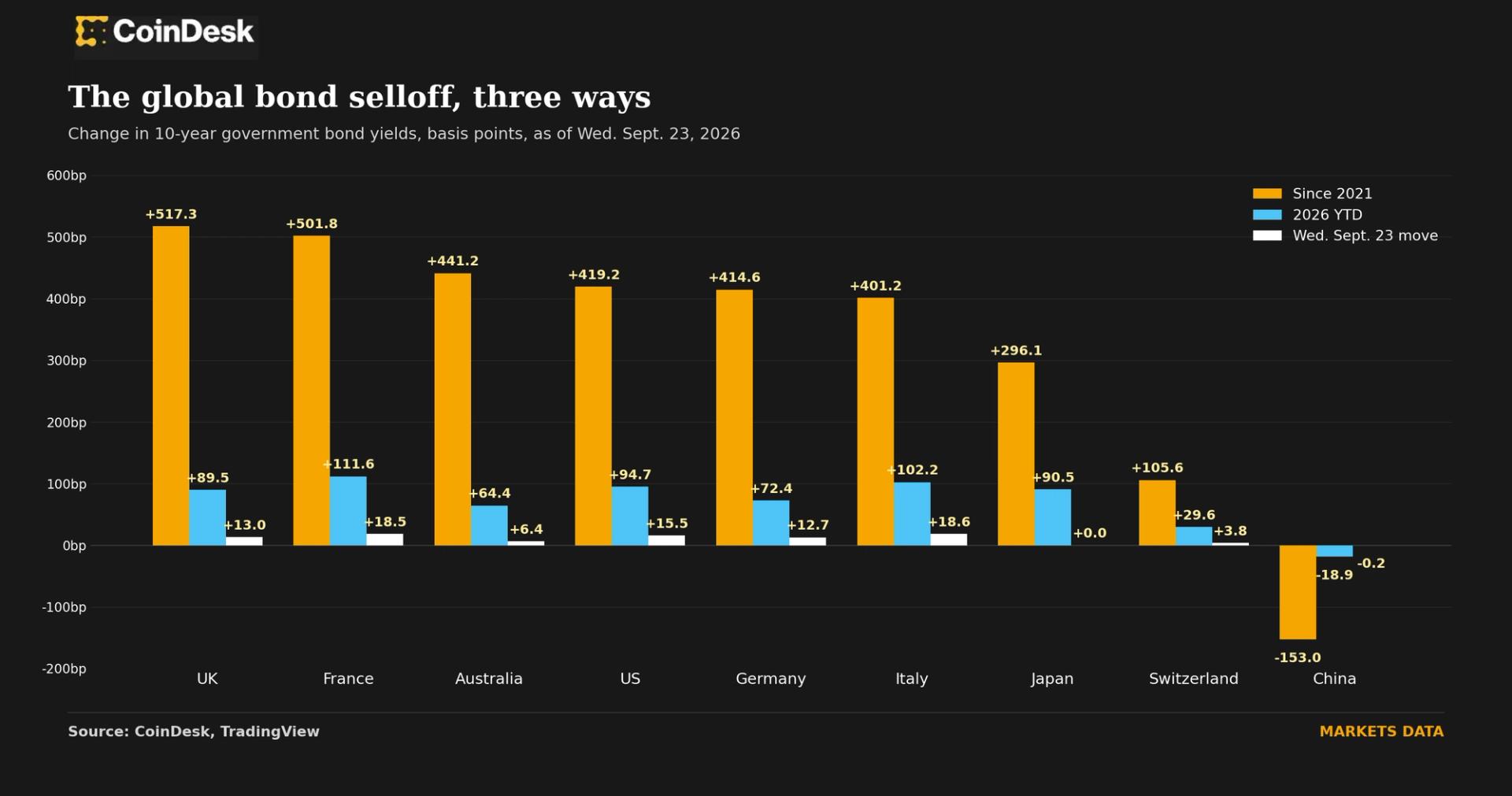
A sudden spike in bond market turbulence, particularly in Treasuries, which underpin global finance, can tighten financial conditions, make credit more expensive, and trigger broader risk aversion.

The MOVE Index, which tracks expected turbulence in Treasury notes, surged 21% to 95 points on Wednesday, its highest level since April 1. That helps explain bitcoin's pullback from $87,200 to $83,500 on Wednesday, though the market may also have simply been looking for a reason to pull back after the recent steep run higher.
If Treasury volatility persists or climbs further, bitcoin could correct more.
Yields rise
Yields’ lift on Wednesday was led by U.S. data, not fiscal fear.
S&P Global's flash U.S. Composite PMI rose to 58.4 in September, the highest reading since July 2021, up from 56.0 in August, with business activity expanding at its fastest pace in more than five years alongside a buildup in inflationary pressure.
That data reinforced expectations that the Fed will need to keep hiking after the September rate increase of 25 basis points. The 10-year and two-year yields both jumped on it.
But a closer look at the feature image shows France's yield actually rose more than the U.S.'s on Wednesday, even though it was U.S. data driving the move. The U.K.'s yield also rose nearly as much as the U.S. Per Robin Brooks, Senior Fellow at the Brookings Institution and former chief economist at the IIF, the same held for Italy and Greece.