Solana bot turns just $12,000 into $1.4 billion in trading volume as fake liquidity floods Raydium
Quick Take
- A Solana wallet used roughly $12,000 in capital to generate $1.4 billion in suspected wash trades, accounting for 22.7% of Raydium CLMM volume.
- Ten associated pools displayed $5.93 billion in liquidity despite holding just $10,238 in USDC, raising concerns about misleading market valuations.
- Bitquery identified fake-looking tokens and coordinated trading activity, but the operator remains unknown as questions grow over investor exposure.

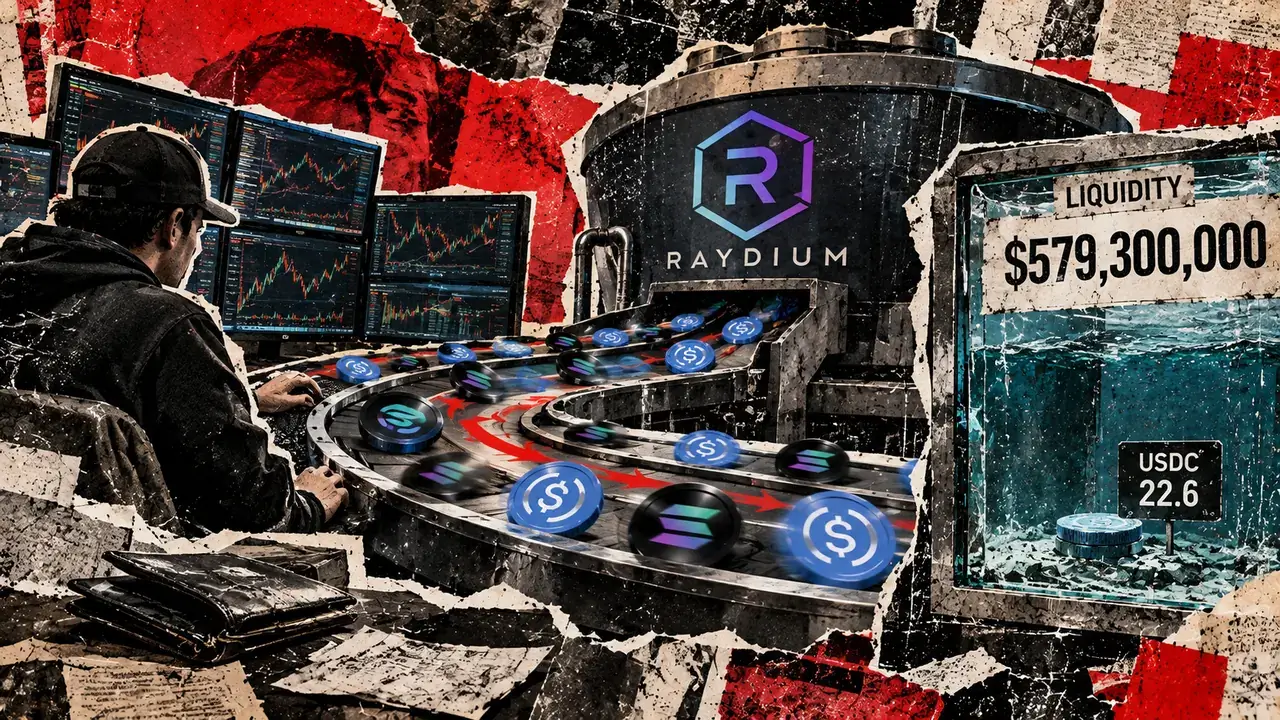
A single Solana wallet generated $1.4 billion in suspected wash trades, accounting for nearly a quarter of Raydium's concentrated-liquidity volume.
On Oct. 21, blockchain analytics firm Bitquery reported that the wallet accounted for 22.7% of the $6.17 billion traded across Raydium's concentrated liquidity market maker (CLMM) pools between Sept. 21 and Oct. 20.
The investigation identified 108,871 swaps across 438 pools, many containing tokens that imitated established cryptocurrencies such as XRP, Litecoin, Monero, and Lisk. Bitquery traced the activity to a suspected wash-trading operation that used about $12,000 in working capital to repeatedly generate transactions worth millions of dollars.
The findings raise fresh concerns about the reliability of decentralized exchange trading volumes and liquidity figures, which investors frequently use to assess market activity and determine whether tokens can be bought or sold without substantial price disruption.
The operation relied on rapidly buying tokens and selling them back into the same pools, allowing a relatively small amount of capital to generate substantial reported turnover.
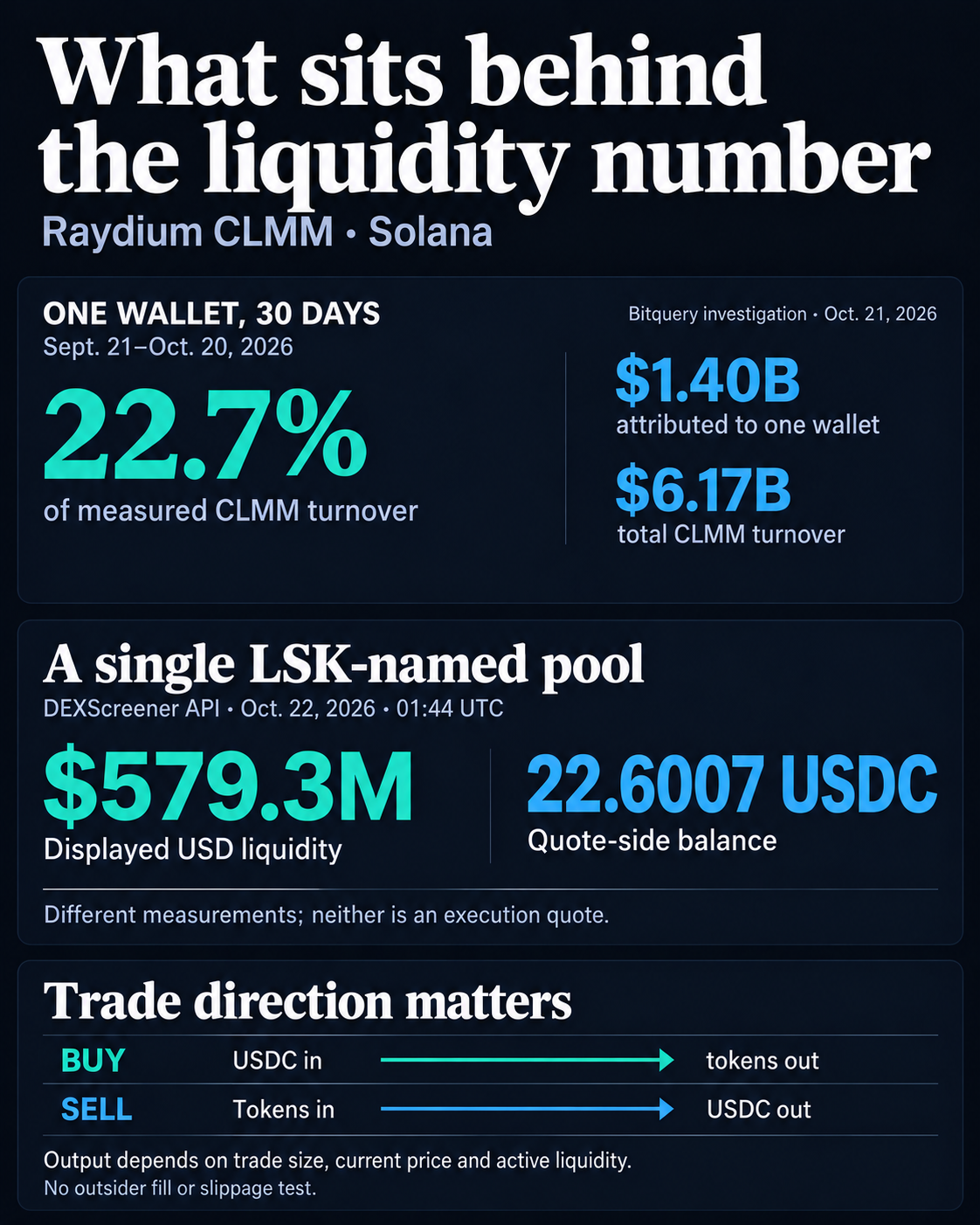
In one Oct. 20 transaction, the wallet exchanged 11,102 USDC for tokens in a pool carrying Lisk's LSK ticker, then sold them back 22 seconds later for 11,100.87 USDC.
That transaction generated approximately $22,200 in recorded trading volume at a cost of just $1.13, excluding network fees. Bitquery identified 22,685 completed round trips during the reporting period.
Fake token pools display billions in questionable liquidity
The investigation also found substantial discrepancies between the liquidity shown on popular trading platforms and the dollar reserves backing the suspected operation's token pools.
According to Bitquery, ten pools linked to the wallet showed about $5.93 billion in combined liquidity on DEXScreener, despite holding just $10,238 in USDC reserves.
One pool using Lisk's ticker displayed $579 million in liquidity while holding approximately $19 in USDC when Bitquery examined it.
The enormous valuation came from nearly one billion tokens priced at about $0.58 each, close to the market price of the legitimate Lisk cryptocurrency.
However, the displayed valuation offered little assurance that investors could liquidate substantial positions without severely disrupting the price. Actual execution depends on the liquidity available at prevailing prices, particularly in concentrated-liquidity pools.
Bitquery found similar arrangements involving tokens using tickers associated with Monero, XRP, Ethereum, and other established cryptocurrencies.
The pools were also appearing prominently in token searches, potentially exposing investors looking for legitimate assets to similarly named tokens with misleading trading statistics.
In one example, the investigation found that seven of the top ten DEXScreener search results for XMR were associated with the suspected cluster.
Additional wallets appeared to reinforce the operation. Bitquery identified 12 suspected helper wallets that collectively executed about 1.25 million swaps, adding activity across thousands of pools.
Despite the enormous reported turnover, only four wallets outside the suspected cluster traded its pools the previous week, generating about $27 in combined transactions.
The findings build on CryptoSlate's September reporting, which detailed Bitquery's identification of $117.7 billion in circular or bot-like activity across its broader Solana decentralized exchange sample.
The latest investigation identifies a more concentrated operation capable of influencing a substantial share of one Raydium trading segment while producing market statistics that could mislead outside participants.
Bitquery linked the wallets through shared trading pools, funding sources, and direct transfers, but did not identify the operator or establish investor losses. The findings also do not establish Raydium's involvement or the involvement of the trading platforms displaying the pools.
The evidence leaves an unresolved risk for decentralized trading platforms: whether their volume rankings, token searches and liquidity displays can distinguish independently funded markets from coordinated trading activity before unsuspecting investors commit capital.
Mentioned in this article

Editorial credits

Oluwapelumi values Bitcoin's potential. He imparts insights on a range of topics like DeFi, hacks, mining and culture, underlining transformative power.