Nigeria tells dollar-stablecoin issuers: go local or lose retail access
Quick Take
- Nigeria now requires retail dollar stablecoins to have a locally licensed issuer and token approval.
- Existing operators face a conditional 180-day application window; continued Class 2 access during assessment needs express CBN permission.
- A separate recognition route permits approved wholesale cross-border settlement using foreign-issued stablecoins while excluding Nigerian retail offerings.

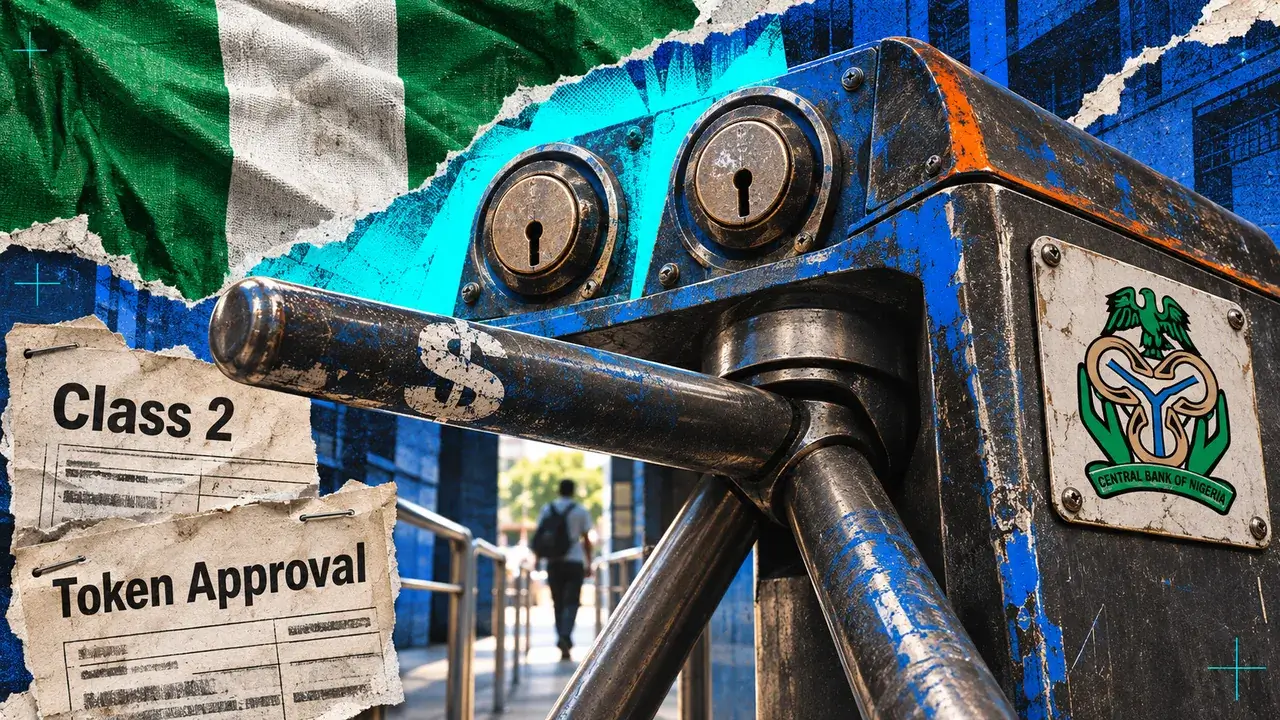
Nigeria’s central bank now requires dollar-pegged stablecoins offered to retail customers to be issued by locally incorporated, licensed entities and receive token approval. The rules took effect November 5, 2026, with a conditional 180-day application transition for existing operators. Continued access for foreign-currency stablecoin arrangements during assessment requires express permission from the Central Bank of Nigeria (CBN).
The CBN regulations classify foreign-currency stablecoins as Class 2. Section 6.5 requires a Nigerian-incorporated entity holding a Foreign Currency Issuer License (Class 2), alongside approval of the token itself.
A foreign license, regulatory status or agreement with a Nigerian intermediary cannot substitute for those approvals. The rules reach regulated activities directed at people in Nigeria even when the provider has no physical presence there.
Issuers and service providers face distinct approval requirements. Non-issuance service licenses or authorizations do not permit stablecoin issuance, while issuer applicants must establish a staffed Nigerian office and effective local management before final licensing, including a resident chief compliance officer.
The framework makes a narrow exception to local issuance. Section 11.10.17 allows the CBN to recognize a foreign-issued stablecoin solely for expressly approved wholesale cross-border settlement. That route excludes offerings to Nigerian retail customers, so it does not provide a substitute for the retail licensing requirements.
Approval also has limits on domestic use. Class 2 Token Approval does not authorize settling, pricing or discharging a naira-denominated domestic obligation unless applicable foreign-exchange or other law expressly permits it.
The regulations preserve the Securities and Exchange Commission’s statutory jurisdiction and do not automatically cancel approvals under other Nigerian frameworks. An existing principal license nevertheless does not remove the need for express CBN approval for non-security virtual asset services.
What Nigeria’s transition permits
Section 54.1 gives existing operators 180 calendar days from commencement to submit a complete application for the appropriate license or authorization. They may continue only at their existing scale and subject to the CBN’s interim conditions.
Time to apply. Permission to operate.
Nigeria’s stablecoin transition has earlier obligations. Foreign-currency tokens follow distinct retail and wholesale approval routes.
Which access route?
Full retail access requires a Nigerian Class 2 issuer and Token Approval; existing arrangements have a conditional transition.
Applying is one obligation. Continued Class 2 access still needs express interim permission.
No named provider or token’s approval status is established. Reporting may be required before 60 days; wholesale recognition is discretionary.
Sources
Supporting facts
- The CBN’s Regulations for the Operations of Non-Security Virtual Assets in Nigeria took effect on November 5, 2026. [1]
- Subject to the conditional transition in section 54.1, section 6.5 requires foreign-currency stablecoins offered to Nigerian retail customers to be issued through a Nigerian-incorporated Class 2 licensed entity and receive Token Approval; section 11.10.17 separately permits CBN recognition of foreign-issued stablecoins solely for expressly approved wholesale cross-border settlement, with no Nigerian retail offering. [1]
- For Nigerian retail market access, a foreign licence, registration, approval, regulatory status or arrangement with a Nigerian intermediary does not substitute for the Class 2 issuer licence or Token Approval. [1]
- Section 54.1 requires existing operators to submit a complete application for the appropriate licence or authorisation within 180 calendar days of commencement; continuation is conditional on existing scale, the CBN’s interim conditions, timely registration and reporting, and financial-crime compliance. [1]
- The transition requires registration with the CBN within 30 days, compliance with anti-money laundering, counter-terrorist financing and counter-proliferation financing requirements from commencement, supervisory reporting within 60 days or an earlier prescribed period, and a complete application within the transition period. [1]
- An existing operator that fails to submit within the transition period must cease operating until the required licence or authorisation is obtained. [1]
- Existing Class 2 arrangements must be assessed against Nigerian incorporation, issuer licensing and service-provider approval requirements; continued access during assessment requires the CBN’s express interim permission and creates no permanent exemption. [1]
Method
Source-bound legal milestones, not observed approvals. Desktop timeline positions 30, 60 and 180 days proportionally from commencement. Mobile milestones use vertical spacing for legibility. Route connectors show required approvals, not a promised sequence or transfer of funds.
Scope
No named provider or token’s approval status is established. Reporting may be required before 60 days; wholesale recognition is discretionary.
 CryptoSlate
The transition also requires registration with the bank within 30 days and supervisory reporting within 60 days, or an earlier prescribed period. Anti-money laundering, counter-terrorist financing and counter-proliferation financing requirements apply from commencement.
For existing Class 2 arrangements, the CBN will assess Nigerian incorporation, issuer licensing and service-provider approvals. Continued access during that assessment requires the bank’s express interim permission and does not create a permanent exemption. Submitting an application alone therefore does not establish permission to keep serving the market.
Operators that miss the application deadline must cease operating until the necessary license or authorization is obtained.
Editorial credits

Also known as "Akiba," Liam Wright is a reporter, podcast producer, and Editor-in-Chief at CryptoSlate. He believes that decentralized technology has the potential to make…