Kava moves to shut down lending platform after hackers drain nearly $4 million
Quick Take
- Kava plans to permanently disable HARD Lend's borrowing and lending services after hackers stole 53.9 million KAVA worth approximately $4 million.
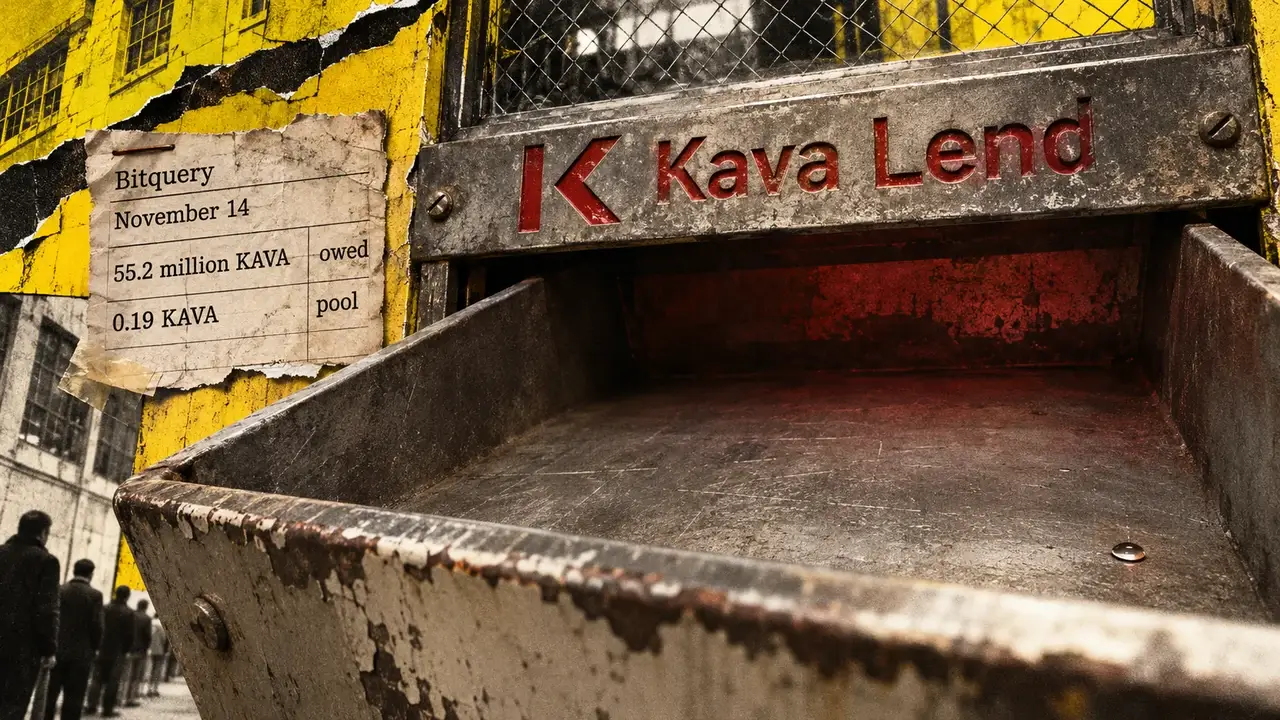
- The exploit left just 0.19 KAVA available against 55.2 million owed to lenders, raising concerns about the protocol's ability to meet withdrawal claims.
- Kava has frozen some stolen funds, but the amount recovered and how outstanding lender claims will be settled remain unclear.

Kava plans to retire HARD Lend's borrowing functionality after hackers stole 53.9 million KAVA, leaving the lending protocol facing a substantial liquidity shortfall.
The blockchain network confirmed on Nov. 16 that the Nov. 14 attack exploited a vulnerability in HARD Lend's accounting system, allowing attackers to withdraw existing KAVA tokens through manipulated collateral and liquidation transactions.
The stolen tokens were worth $3.7 million before the subsequent market selloff, according to blockchain analytics firm Bitquery.
Kava said it had patched the vulnerability and introduced safeguards to prevent attackers from repeating the exploit. It also accelerated plans to retire the lending service, with a governance proposal expected to permanently disable new lending and borrowing.
The proposal must pass a seven-day governance voting process, while existing protective measures remain in force.
“The planned retirement of HARD Lend's legacy lending functionality is being accelerated,” Kava said, adding that it would address remaining positions through an orderly process.
The company emphasized that the breach was confined to HARD Lend and did not compromise the underlying Kava blockchain or create additional tokens.
However, the incident has raised questions about how the protocol will settle outstanding obligations after losing almost all the tokens available in its lending pool.
Kava freezes stolen funds as lenders face unresolved withdrawal claims
Kava said attackers manipulated the value of BUSD collateral within HARD Lend, allowing them to repeatedly borrow KAVA and trigger liquidations that cleared their debts without recovering the borrowed tokens.
An investigation by blockchain analysis firm Bitquery found that the attackers borrowed about 55.2 million KAVA across 127 transactions and retained 53.9 million tokens after repayments involving other borrowers.
The attackers subsequently moved about 49.2 million KAVA to BNB Chain through LayerZero.
Bitquery traced the sale of 48.4 million KAVA, which generated approximately $2.09 million in BNB and USDT.
The investigation also identified a failed transaction involving 612,416 USDT through the Relay bridge. The service rejected the transfer with a “BLOCKED_WALLET” message, preventing the requested payout to Ethereum.
A blocked payout does not refill the lending pool
November 14 evidence describes three distinct access paths: lender claims, a failed bridge order and exchange transfers.
Lender withdrawals require usable KAVA in the pool. Blocking a bridge payout or reopening exchange transfers does not itself supply that cash.
Pool and bridge observations are dated November 14. Relay record was read at 16:20 UTC; BNB Chain/Ethereum data end at 16:08 UTC. The withdrawable flag was untested. Coinone notice is not a live status feed.
Sources
Supporting facts
- Bitquery’s November 14 reconstruction reports that Kava Lend owed lenders 55.2 million KAVA but held just 0.19 KAVA at its later reading that day. [1]
- Kava Lend lenders need cash available in the lending pool to withdraw; Bitquery’s November 14 finding of almost no KAVA cash indicates that the pool could not satisfy those lender claims in full at that reading. [1]
- Bitquery reports that a Relay order for 612,416 USDT was marked failure with reason BLOCKED_WALLET in a November 14, 16:20 UTC record, and that its separate chain checks found neither a payout nor a refund. [1]
- Bitquery says Relay’s record marked the deposit as withdrawable, but it did not test that capability; blocking the payout therefore does not establish permanent seizure or restitution to Kava Lend lenders. [1]
- Coinone’s November 14 notice suspended KAVA deposits and withdrawals from 19:40 KST for security checks and said trading and other services were unaffected unless separately announced. [2]
- Coinone’s notice says service resumption will be announced after security measures and stability checks, which addresses exchange access rather than the cash backing Kava Lend deposits. [2]
Method
Select dated reported balances and access states. Connectors depict access routes only, not quantitative flows. Pool outline is schematic, not proportional. No derived totals, valuations or exchange conversions.
Scope
Pool and bridge observations are dated November 14. Relay record was read at 16:20 UTC; BNB Chain/Ethereum data end at 16:08 UTC. The withdrawable flag was untested. Coinone notice is not a live status feed.
 CryptoSlate
Kava separately confirmed that part of the attackers' funds had been frozen and said it was working with exchanges, ecosystem partners, and law enforcement to trace and recover the remaining assets.
However, it did not disclose how much had been secured or whether the frozen funds included the USDT identified by Bitquery.
The recovery efforts have yet to resolve the more immediate problem facing HARD Lend's depositors.
Bitquery's Nov. 14 reconstruction showed that the lending pool owed users approximately 55.2 million KAVA while holding just 0.19 KAVA available for withdrawals.
The blockchain network said “Individual user deposits were largely unaffected,” but did not explain how that assessment relates to outstanding lender claims or depleted pool liquidity. It also promised further guidance for affected users as the retirement proposal progresses.
Mentioned in this article
Editorial credits

Oluwapelumi values Bitcoin's potential. He imparts insights on a range of topics like DeFi, hacks, mining and culture, underlining transformative power.