Google opens AI rainfall tracking system that could improve global flood and drought monitoring
Quick Take
- Google DeepMind has opened access to its AI-powered rainfall dataset, offering global precipitation estimates and historical records dating back to 1999.
- The system achieved over 30% higher detection skill than NASA's benchmark for certain rainfall, potentially improving flood and drought research.
- Despite its accuracy gains, a five-hour average data delay raises questions about its usefulness for monitoring rapidly developing disasters.

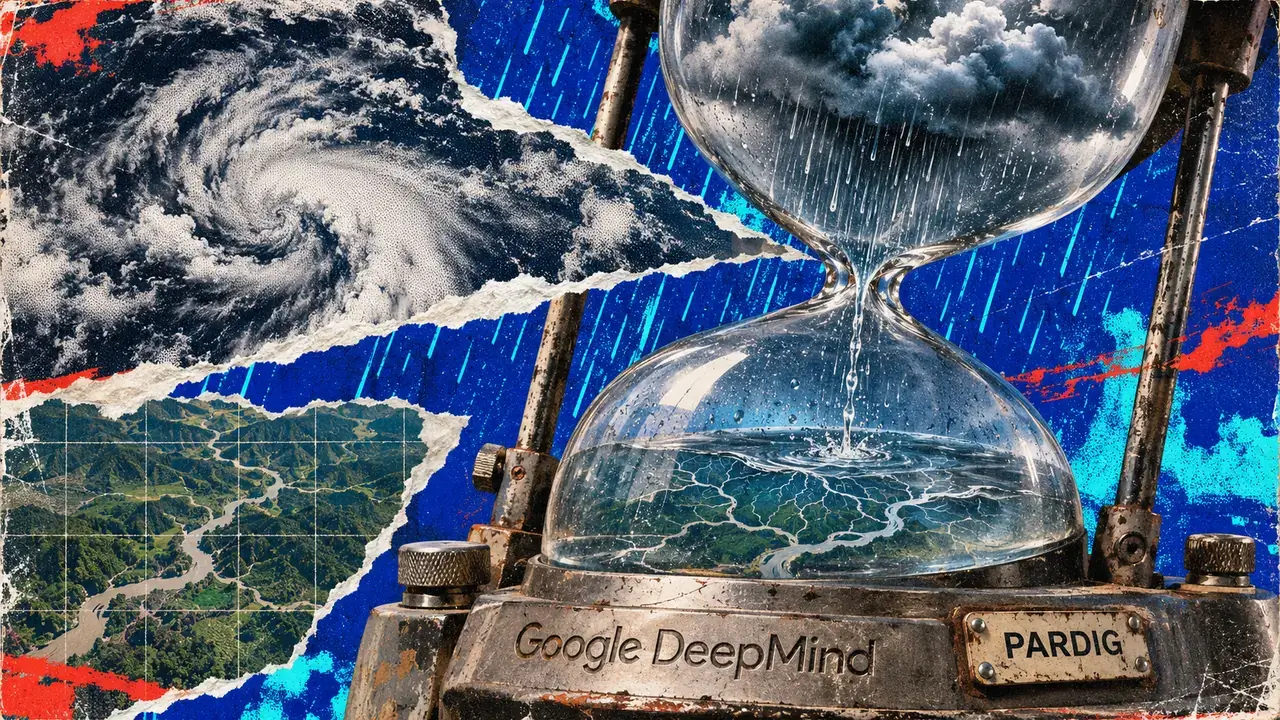
Google DeepMind has opened access to an artificial intelligence system that tracks rainfall worldwide, potentially helping researchers monitor floods and droughts in regions with limited weather infrastructure.
The company announced on Nov. 13 that researchers and developers can now access historical records and continuously updated data from PARDIG, its AI-powered global precipitation monitoring system.
The technology combines satellite observations and atmospheric data to estimate rainfall every 15 minutes across a global grid with roughly 10-kilometer resolution.
Its release could expand access to rainfall intelligence in developing countries and remote regions where limited weather radar coverage makes it difficult to track storms, flooding and prolonged dry spells.
Google said PARDIG learns from precipitation measurements collected by NASA's Global Precipitation Measurement satellite and uses additional satellite imagery and atmospheric information to estimate rainfall across the planet.
Unlike conventional monitoring systems that depend heavily on ground-based weather stations, PARDIG can generate estimates over oceans and regions with sparse observation networks.
The dataset also supports Google's WeatherNext 3 forecasting model, which uses PARDIG-generated rainfall information during training.
Researchers can access historical rainfall records dating back to 1999, alongside a separate dataset covering 2016 to the present.
Google has released both under a Creative Commons license that permits commercial reuse with attribution, potentially allowing companies to incorporate the information into agricultural monitoring, water management and disaster-risk applications.
Google's AI beats NASA rainfall benchmark by more than 30%
DeepMind said PARDIG achieved more than 30% higher hourly precipitation detection skill than NASA's IMERG-Final dataset when measuring light-to-moderate rainfall.
The company evaluated the system against radar networks in the United States, Europe and Japan, alongside observations from more than 36,000 weather stations worldwide.
Its research paper also reported improved identification of intense rainfall events, which existing global precipitation datasets can struggle to capture accurately.
These capabilities could help researchers develop more detailed models of extreme weather events, including flash floods, landslides and drought conditions.
Google highlighted the July 2025 Texas Hill Country floods as one example, comparing PARDIG's estimates with ground-based radar measurements and NASA's existing rainfall dataset.
However, the technology has limitations that could constrain its use during rapidly developing emergencies.
Although PARDIG estimates rainfall at 15-minute intervals, Google publishes its near-real-time data in six-hour batches, creating an average delay of about five hours between observation and availability.
Quarter-hour estimates arrive in six-hour batches
PARDIG's 15-minute resolution describes the estimates. Cloud Storage delivers them in batches with roughly two to eight hours of delay.
Fine time resolution does not mean immediate delivery.
Google's documented delivery schedule, not a measured uptime or speed test. Latency is approximate at publication. PARDIG is experimental precipitation estimation and does not replace official warnings.
Sources
Supporting facts
- PARDIG estimates precipitation rates at 15-minute intervals on a 0.1-degree grid, roughly 10 kilometers, using satellite observations and ECMWF atmospheric fields. [1]
- PARDIG-NRT data on Google Cloud Storage are published every six hours in batches of 24 estimates, with roughly two-to-eight-hour effective latency at publication and an average delay of about five hours. [1]
- Google describes PARDIG as experimental and says it does not constitute official observations, forecasts or warnings; users protecting life and property should defer to official alerts. [1]
Method
Schematic of the 24 quarter-hour estimates in one reported six-hour delivery batch. Equal markers represent estimate times, not rainfall amounts. Delay labels describe approximate frame age at publication; no observed storm or publication timestamp is depicted.
Scope
Google's documented delivery schedule, not a measured uptime or speed test. Latency is approximate at publication. PARDIG is experimental precipitation estimation and does not replace official warnings.
 CryptoSlate
This means emergency services cannot use the dataset as an immediate substitute for live weather warnings.
Google also acknowledged that the system can underestimate snowfall in mountainous regions and is less reliable in certain polar areas.
Meanwhile, the company still classifies PARDIG as experimental and advises users to rely on official meteorological agencies when making public-safety decisions.
Mentioned in this article
Editorial credits

Oluwapelumi values Bitcoin's potential. He imparts insights on a range of topics like DeFi, hacks, mining and culture, underlining transformative power.