Google AI spots high blood pressure using ordinary watch sensors
Quick Take
- Google's research system used smartwatch pulse and motion signals to flag possible hypertension without personal cuff calibration.
- In 196 participants, the AI detected 65.8% of hypertension cases, leaving about 33% missed despite screening potential.
- Clinical confirmation remains necessary, while the selected cohort limits how widely the study's screening results can be generalized.

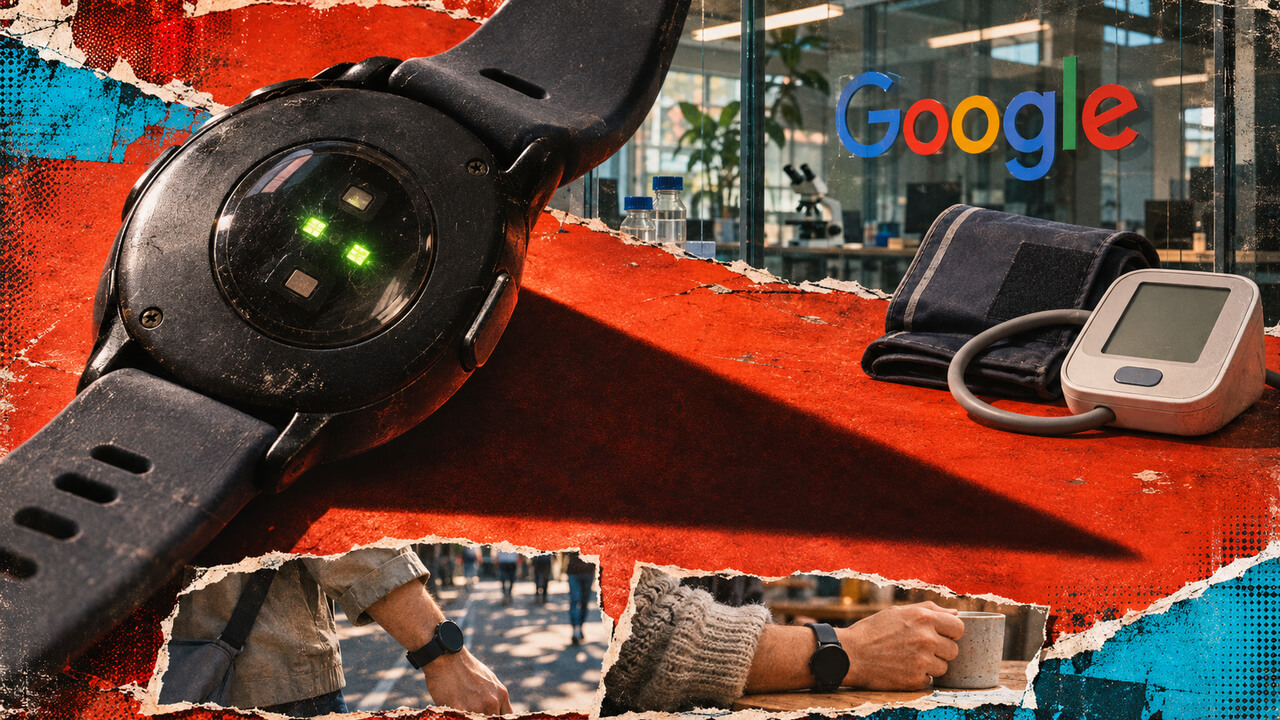
Google researchers and medical collaborators have used ordinary smartwatch signals to flag possible high blood pressure without calibrating the watch against an arm cuff.
A study published in Nature on Nov. 5 suggests a way to prompt clinical checks during everyday wear, although the system missed about 33% of hypertension cases.
The AI identified 65.8% of participants with hypertension according to a clinical reference test (sensitivity), while it correctly screened 90% of those without the condition as negative (specificity).
The prospective, multicenter study followed 196 participants through seven days of smartwatch monitoring and compared results with 24-hour ambulatory blood-pressure monitoring. Participants had no known cardiovascular disease and were not taking blood-pressure medication, limiting how far the findings extend to people already receiving treatment.
The 95% confidence intervals were 54% to 76.3% for sensitivity and 83.2% to 94.7% for specificity.
A wrist signal to get checked
The research system turns seven days of pulse and motion data into a screening score. Its detection rate leaves a substantial blind spot.
Two groups, two screening measures
Of participants with hypertension on 24-hour ambulatory monitoring, 65.8% were detected and 34.2% were missed.
Screening can flag a reason for a clinical check; a negative result cannot exclude hypertension.
196 participants in a selected, risk-enriched cohort, without known cardiovascular disease or antihypertensive medication. Bars show conditional study rates, not predictive values for all smartwatch users. This is screening research, not a standalone diagnosis.
Sources
Supporting facts
- A study published in Nature on November 5, 2026 evaluated an AI system that detects signs of hypertension from consumer smartwatch signals without cuff calibration. [1]
- The prospective multicenter validation involved 196 participants without known cardiovascular disease and not taking antihypertensive medication, with seven days of smartwatch monitoring assessed against 24-hour ambulatory blood-pressure monitoring. [1] [3]
- In the initial screening analysis, smartwatch sensitivity was 65.8% (95% confidence interval, 54.0% to 76.3%) and specificity was 90.0% (83.2% to 94.7%). [1]
- The 65.8% sensitivity means the smartwatch system missed about one-third of hypertension cases in this study, so a negative screen cannot rule out hypertension. [1]
- The AI combines optical pulse-wave measurements with accelerometer signals, aggregates information across days and includes the user's height to produce a hypertension probability score rather than exact systolic and diastolic readings. [3]
- The supplement defines the main hypertension reference threshold as 24-hour systolic/diastolic blood pressure of at least 130/80 mmHg and describes the prospective validation cohort as intentionally risk-enriched. [2]
- The authors present smartwatch screening as a possible prompt for clinical assessment and confirmatory cuff-based diagnosis, rather than a standalone diagnosis or replacement for standard arm cuffs. [1] [3]
Method
Reported sensitivity 65.8% and specificity 90.0% from the 196-person prospective study. JavaScript arithmetic: 100-65.8=34.2% missed; 100-90.0=10.0% false alerts. Bar lengths are proportional to these shares; no hypothetical patient counts. 95% confidence intervals retain reported precision.
Scope
196 participants in a selected, risk-enriched cohort, without known cardiovascular disease or antihypertensive medication. Bars show conditional study rates, not predictive values for all smartwatch users. This is screening research, not a standalone diagnosis.
 CryptoSlate
How everyday sensors become a screening signal
The system, called AI-PPG-ACC-HTN, combines optical pulse-wave measurements with accelerometer signals.
According to Google Research's explanation, it aggregates those signals across days and combines them with the user's height to produce a probability of hypertension.
It does not report an exact systolic and diastolic blood-pressure reading. No personal cuff reading is needed to calibrate the smartwatch system, though cuff-based measurements remained the reference the researchers used to test it.
The waveform model was pretrained using 492,347 hours of unlabeled sensor data from 2,109 consenting participants.
The study supplement describes the prospective cohort as intentionally risk-enriched. In this selected group, 80.6% of positive smartwatch screens matched hypertension on the reference test, the measure known as positive predictive value.
The research involved Google Research, Beth Israel Deaconess Medical Center and Harvard Medical School.
The authors describe a possible role for smartwatch screening in prompting formal assessment and confirmatory diagnosis using established cuff-based methods, with the watch prompting a clinical check.
Mentioned in this article
Editorial credits

Also known as "Akiba," Liam Wright is a reporter, podcast producer, and Editor-in-Chief at CryptoSlate. He believes that decentralized technology has the potential to make…

Gino Matos is a law school graduate and a seasoned journalist with six years of experience in the crypto industry. His expertise primarily focuses on the Brazilian blockchain…