Global bond yields surge as debt fears test bitcoin’s hedge narrative
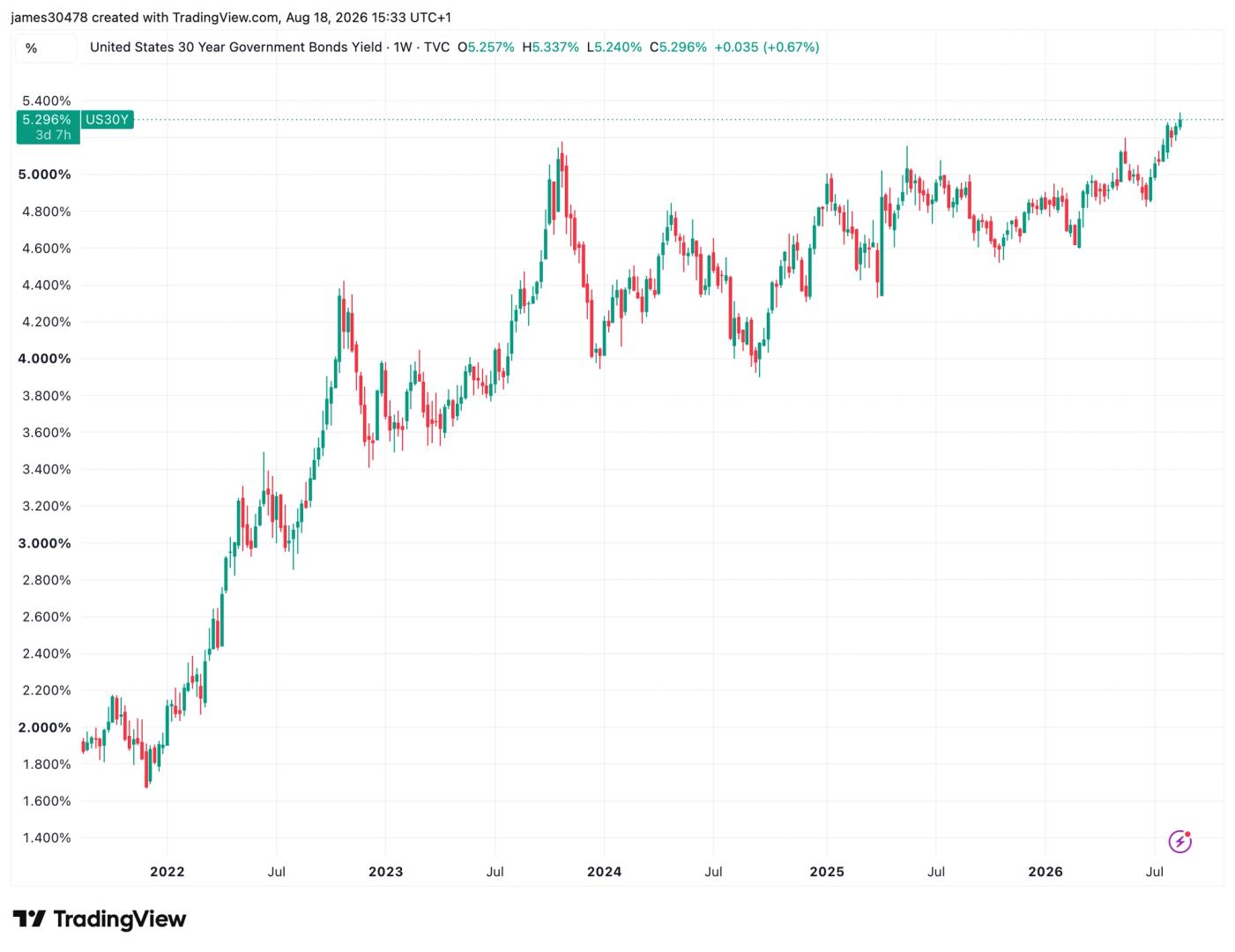
- The 30-year U.S. Treasury yield has climbed to 5.33%, its highest level in about 20 years.
- Higher bond returns threaten to draw capital away from risk assets, but gold’s rally suggests investors are also hedging against weakening sovereign credibility.
Long-term government bond yields are climbing to levels not seen in decades, as investors contend with a wave of debt issuance and growing concerns about sovereign finances as U.S. government debt is approaching $40 trillion.
Bond prices and yields move inversely, meaning yields rise when investors sell bonds. The 30-year U.S. Treasury yield has reached 5.33%, its highest level since 2007, while the equivalent U.K. gilt yield is approaching 6%. French borrowing costs are at their highest since 2008, and Japan’s long-term yields continue to set records.
TLT, the exchange-traded fund (ETF) tracking long-duration U.S. Treasuries, fell to an all-time low of $81.35 on Monday.
Oil remains a concern, as WTI crude is trading above $84 a barrel, up 25% from its July low, and has remained above $70 since the war began in February. However, five and ten-year inflation expectations have been relatively stable over the past week, at 2.25% and 2.28%, respectively. That suggests inflation is not the market’s primary concern.

Attention is increasingly turning to debt supply and refinancing risk on the AI infrastructure buildout. Hyperscalers have issued a combined $159 billion of bonds in 2026, up 47% from a year earlier, largely to finance AI infrastructure. Goldman Sachs expects total issuance to reach $400 billion this year. Every basis-point increase raises the cost of refinancing that debt.