Ethereum’s Glamsterdam test runs near 200 million gas per block after upgrade
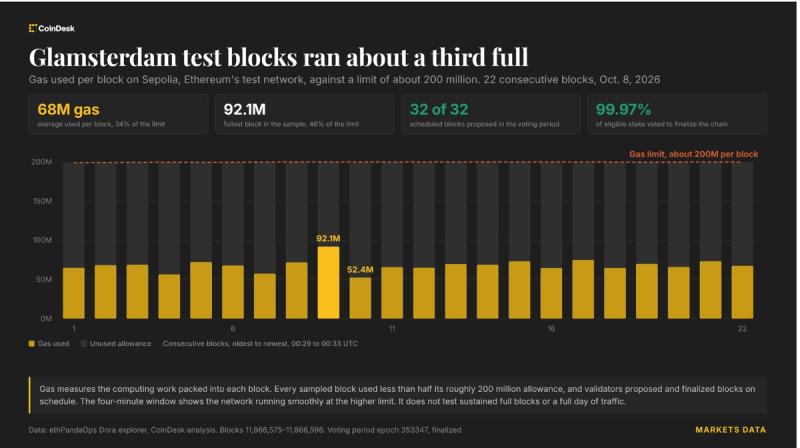
During a separate six-minute voting period early Thursday, all 32 scheduled blocks were proposed and 99.97% of eligible testnet stake voted toward finality, when the network treats its transaction history as settled, according to testing group ethPandaOps' explorer.
Read More: Ethereum's Glamsterdam test gets last-minute fix before major capacity jump
Glamsterdam changes how Ethereum's computers divide that work. It puts the handoff between “specialists” assembling transactions and validators publishing blocks into the network's rules, giving validators more time to check the transaction calculations.
Blocks also come with a list of the accounts and stored information their transactions touch. Software can use that list to fetch data ahead of time and check unrelated transactions simultaneously, rather than working through everything one after another.
Handling more activity still puts additional demands on computers running Ethereum. The upgrade adjusts charges for creating and accessing stored data, and developers have been told to retest applications that assume particular gas costs.
Hoodi, the next public test network, is tentatively set for Oct. 27 pending the Sepolia results, and Ethereum's mainnet has no activation date.