Diesel prices plunge 8%, yet Bitcoin traders face a squeeze
Quick Take
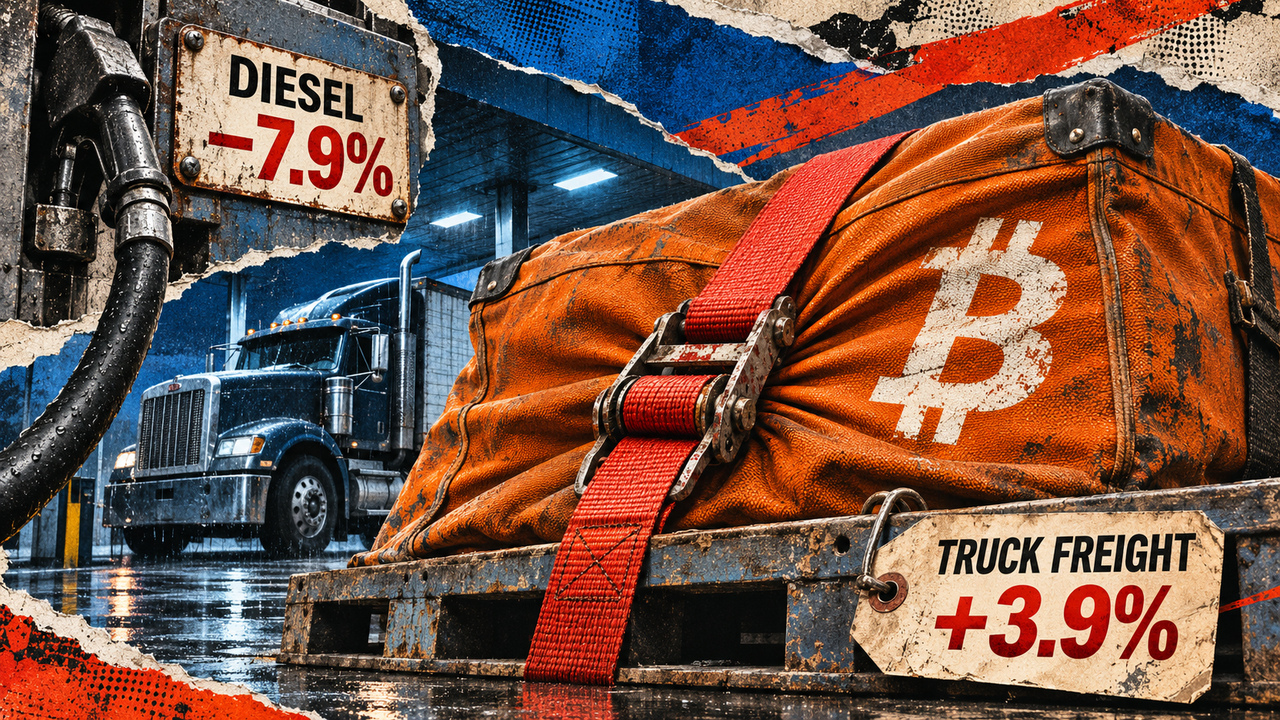
- October’s PPI showed diesel falling 7.9% as truck freight rose 3.9%, keeping the wholesale inflation picture mixed.
- PPI excluding food, energy and trade services rose 0.5% again, limiting the evidence of broad wholesale disinflation.
- Broader inflation cooling and completed ETF inflows would strengthen Bitcoin’s recovery case; financing relief remains conditional.

US wholesale inflation slowed in October, but rising freight prices and firm underlying pressure complicate the case that cheaper fuel will make financing easier for Bitcoin (BTC) holders while BTC remains below $70,000.
The Bureau of Labor Statistics’ October producer-price report, released Nov. 13, showed diesel prices falling 7.9% as truck freight prices rose 3.9%. Headline wholesale inflation slowed sharply, but the measure excluding food, energy, and trade services kept rising at September’s monthly pace.
Final-demand PPI rose 0.3% in October, seasonally adjusted, after September’s revised 1.4% increase.
The measure excluding food, energy and trade services rose 0.5% for a second month. Its annual increase eased to 4.9% from 5%, while headline annual PPI accelerated to 6.5% from 6.3%. Those readings support a mixed assessment of some comparisons improved, but underlying monthly pressure held firm.
BLS attributed more than 80% of October’s 0.2% rise in final-demand services prices to truck freight. Transportation and warehousing services rose 2%, even as final-demand energy prices slipped 0.1%. Goods prices increased 0.5%.
Cheaper diesel coexisted with higher prices for moving goods. For now, the freight increase undercuts an assumption that a lower fuel bill immediately means cheaper transport.
Unprocessed intermediate goods prices fell 3.1%. Alongside slower monthly headline inflation and the easing annual exclusion measure, that gives the more optimistic interpretation real evidence. The question is whether that cooling broadens and lasts.
Cheaper fuel. Firmer freight.
Diesel and truck freight moved in opposite directions in October. The inflation picture also changes with the comparison window.
02 / Change the inflation lens
September → October 2026: headline PPI slowed; the measure excluding food, energy and trade services stayed at 0.5%.
Fuel relief coexists with firm underlying monthly inflation; annual readings are mixed.
PPI series describe different producer prices. Concurrent diesel and freight changes do not establish cause or pass-through timing. Monthly changes are seasonally adjusted; annual changes are unadjusted. PPI is distinct from CPI and PCE.
Sources
Supporting facts
- October final-demand PPI rose 0.3% month over month, seasonally adjusted, after a revised 1.4% increase in September. [1]
- Final-demand PPI excluding foods, energy and trade services rose 0.5% in October, the same monthly increase as September; its unadjusted annual rate eased to 4.9% from 5.0%. [1]
- Headline final-demand PPI rose 6.5% over the year to October, up from 6.3% in September. [1]
- Diesel fuel producer prices fell 7.9% in October while truck transportation of freight prices rose 3.9%; BLS attributed more than 80% of the monthly final-demand services increase to truck freight. [1]
Method
Reported BLS figures. Main signed bars share a linear −10% to +5% axis. Panel bars start at zero, with monthly scale 0–1.5% and annual scale 0–7%. September monthly figures use the release's revisions. No causal or policy effect is calculated.
Scope
PPI series describe different producer prices. Concurrent diesel and freight changes do not establish cause or pass-through timing. Monthly changes are seasonally adjusted; annual changes are unadjusted. PPI is distinct from CPI and PCE.
 CryptoSlate
The hurdle for Bitcoin extends beyond PPI
PPI measures the selling prices domestic producers receive, CPI measures prices paid by consumers, while the Fed targets inflation measured by personal consumption expenditures (PCE).
The measures overlap in the economic pressures they describe, but their readings are not interchangeable.
Speaking before that day’s CPI release, Fed Governor Christopher Waller leaned toward further tightening through a 25-basis-point December rate increase if conditions developed as expected.
He said a 50-basis-point increase should be considered if October core CPI resembled the previous two readings around 0.3% or higher.
The subsequent CPI report showed a 0.4% monthly headline increase and a third consecutive 0.3% increase excluding food and energy.
The Fed’s explanation of monetary policy describes how policy-rate changes affect short-term interest rates and broader financial conditions. Applied to Bitcoin, the conditional mechanism is that lower financing costs could make borrowed exposure easier to carry, while easier conditions could encourage investors to allocate more to risk.
The route from producer prices to financing relief remains conditional. Persistent inflation could keep policy restrictive even when one fuel price falls, while a recovery case based on financing relief needs evidence beyond cheaper diesel.
Farside Investors' completed Nov. 12 row records US Bitcoin ETF net outflows of $284.1 million, preceding the PPI release.
ETF flows describe one investment channel. Still, completed inflows would provide firmer evidence of buyers returning than an inflation-based expectation alone.
Broader cooling in consumer and producer prices, less restrictive assessments from policymakers and observable financing relief would strengthen the case that fuel declines are becoming useful for Bitcoin holders.
Sustained ETF inflows would add demand evidence, while continued underlying inflation pressure and further withdrawals would keep that case weaker, even if diesel keeps getting cheaper.
Mentioned in this article

Editorial credits

Also known as "Akiba," Liam Wright is a reporter, podcast producer, and Editor-in-Chief at CryptoSlate. He believes that decentralized technology has the potential to make…

Gino Matos is a law school graduate and a seasoned journalist with six years of experience in the crypto industry. His expertise primarily focuses on the Brazilian blockchain…