Coinone support breach puts passwords and identity details at risk
Quick Take
- Coinone urges customers who supplied passwords during support chats or calls to change them and matching passwords used elsewhere.
- Coinone says exposure varies by customer and plans individual notices or a lookup service, without giving an affected count.
- Coinone warns of phishing and identity theft, including impersonators who may refer to genuine customer support conversations.

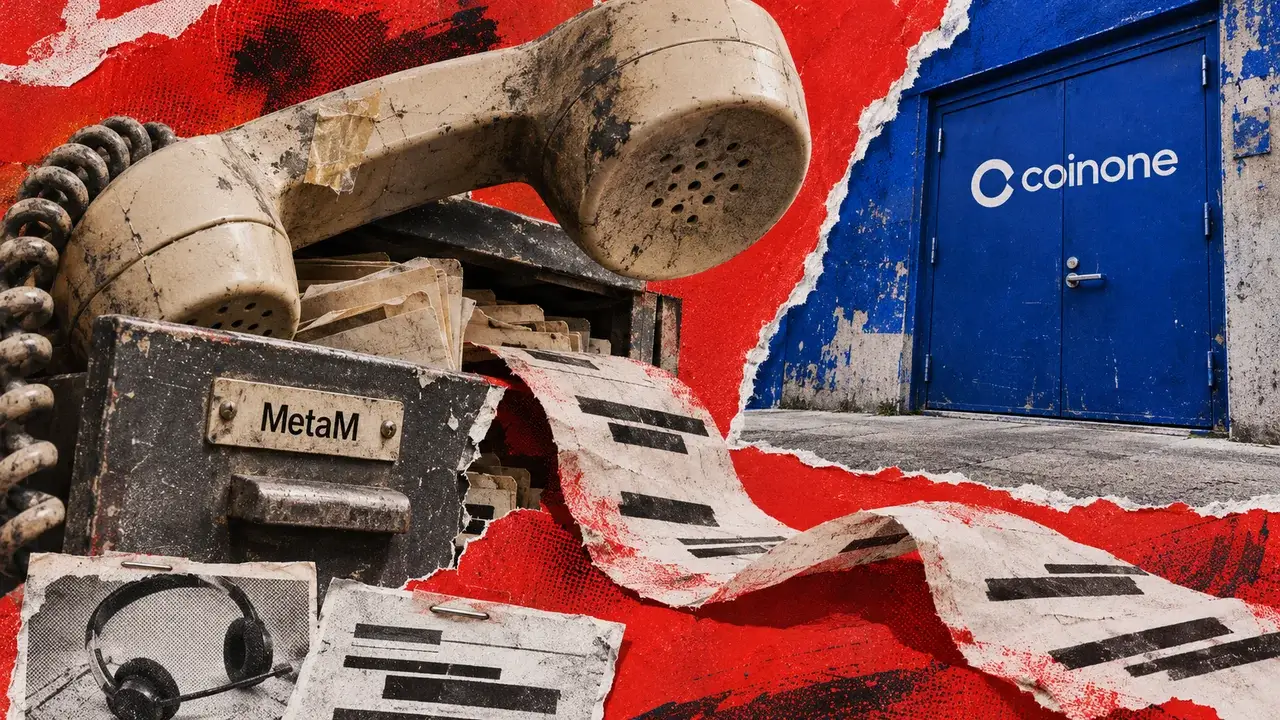
Crypto exchange Coinone has urged customers who supplied a password during support chats or phone calls to change their credentials after disclosing a breach at customer-support contractor MetaM on Nov. 15.
The exchange's notice asks those customers to change their Coinone password and passwords on other websites where they used the same one. Coinone says customers with no customer-center consultation history are unrelated to this leak.
Which passwords should Coinone customers change?
Coinone's Nov. 15 notice directs customers who supplied a password during a support chat or phone call to change it.
Coinone says to change your Coinone password and matching passwords elsewhere if you supplied a password during support.
The notice does not give an affected-customer count or a launch date for individual checks. Actual exposed items may differ with the details supplied during support.
Sources
Supporting facts
- Reported statement Coinone's November 15 notice asks customers who said or entered a password during support consultations to change their Coinone password and passwords at other websites using the same password. [1]
- Reported statement Coinone says customers without a customer-center consultation history are unrelated to this information leak. [1]
- Reported statement Coinone says the list covers possible exposed categories and actual exposed items may differ by customer; it plans separate notices or a personal-information exposure lookup service. [1]
Method
Maps Coinone's conditional credential instruction to the two named password targets. Uses qualitative connectors, not quantities, prevalence, a security guarantee or an estimate of affected customers.
Scope
The notice does not give an affected-customer count or a launch date for individual checks. Actual exposed items may differ with the details supplied during support.
 CryptoSlate
According to Coinone, an attacker illegally accessed MetaM's server on Nov. 12 and viewed or leaked stored consultation information. The exchange says the access occurred around 4 a.m. Korean Standard Time and it received MetaM's report around 9:20 a.m. that day. The exact timing and circumstances of the data leakage remain under investigation.
What the Coinone support breach may have exposed
Coinone says the potentially exposed information came from details customers supplied during chat or telephone consultations. Its list includes names, phone numbers, email addresses, birth dates, bank account numbers and passwords, as well as resident registration numbers, identification-document issue dates, home addresses, wallet addresses and transaction IDs.
Exposure varies by customer, depending on what they supplied during consultations, Coinone says.
The exchange plans separate notifications or a personal-information exposure lookup service so customers can check which items apply to them. The Nov. 15 notice gives neither an affected-customer count nor a launch date for that service.
Coinone says its account, trading and crypto wallet systems operate separately from MetaM's server, and it has found no signs of direct intrusion into those systems so far. It also says every login requires a second authentication step through a registered OTP (one-time password) method or KakaoTalk verification on a phone in the customer's name. According to the exchange, the leaked information alone cannot enable someone else to log in or withdraw assets.
Coinone warns that the information could be used for voice phishing, phishing emails, spam texts and identity theft. A caller or message referring to a real support conversation could still be an impersonator, it says.
The exchange says it never asks by phone, text or email for passwords, one-time passwords or verification codes, or requests crypto withdrawals or wallet-address changes. Its notice also lists password-change and account-lock functions in the app and website, alongside a way to review registered withdrawal addresses.
Coinone says it blocked attack-related IP addresses and access to the customer center, strengthened monitoring and security, and switched outsourced support to email consultations. It says it reported the incident to the Korea Internet & Security Agency, the Personal Information Protection Commission and the Financial Supervisory Service.
Mentioned in this article
Editorial credits

Also known as "Akiba," Liam Wright is a reporter, podcast producer, and Editor-in-Chief at CryptoSlate. He believes that decentralized technology has the potential to make…