Coinbase’s blockchain got faster. Some apps can still connect but get no data
Quick Take
- Base’s Nov. 5 Denim upgrade retired Flashblocks streams, while old WebSocket endpoints still accept connections without delivering data.
- Apps must migrate subscriptions and pending-state assumptions to canonical blocks, with receipts available after transaction inclusion.
- Base’s notice remained marked Verifying on Nov. 9; its Nov. 5 update reported periodic transaction inclusion delays.

Coinbase’s Base blockchain retired its Flashblocks data feeds in the Nov. 5 Denim upgrade, requiring apps using them to migrate. The old WebSocket endpoints still accept connections but no longer deliver data, according to Base’s migration instructions.
Denim activated on mainnet at 18:00 UTC on Nov. 5. Base’s upgrade overview describes complete canonical blocks every 200 milliseconds, each with its own hash, state root and receipts. These are the chain’s blocks rather than previews of a block still being built.
The compatibility trap is that an open connection no longer establishes that an app is receiving updates. Reconnecting to a retired Flashblocks endpoint leaves the underlying integration problem unresolved.
An open connection can carry no updates
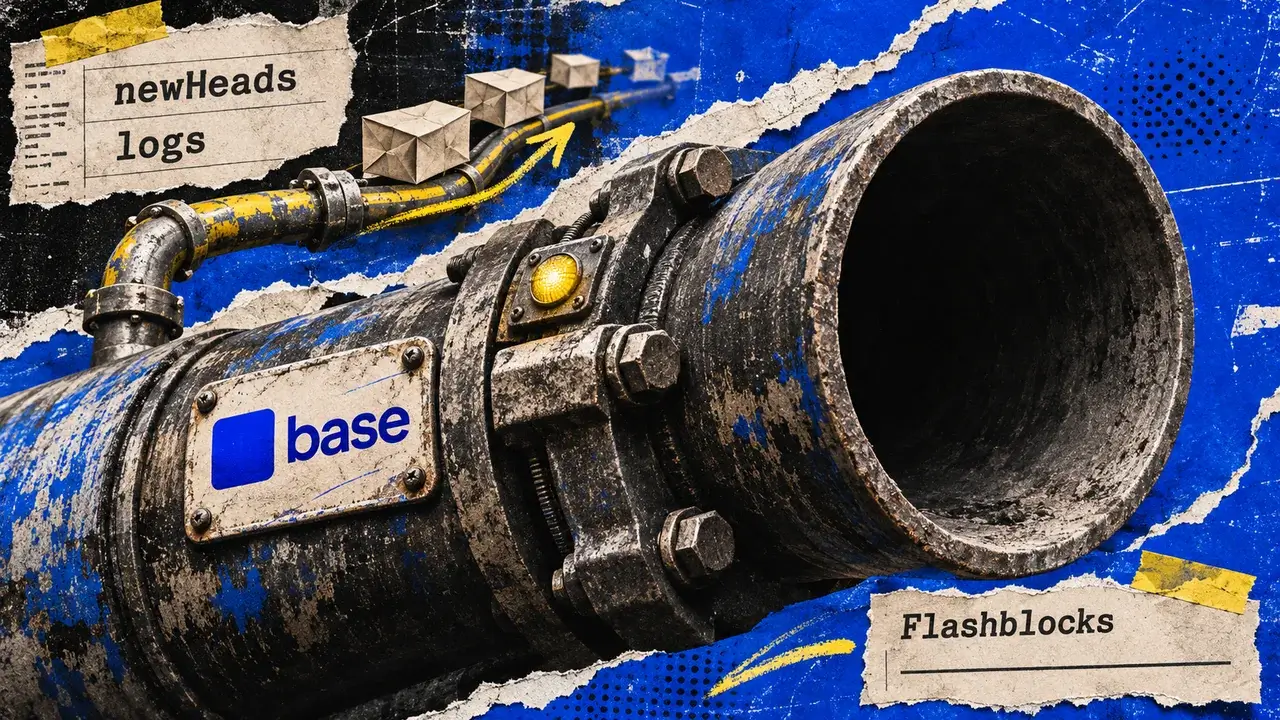
Denim retired Flashblocks. Apps must move their data route to canonical block and RPC streams.
Replace the Flashblocks data route and review what pending-state requests now return.
Schematic routes, not measured traffic or transaction-inclusion latency. Canonical block inclusion remains separate from Ethereum finality.
Sources
Supporting facts
- Base’s retired mainnet and Sepolia Flashblocks WebSocket endpoints still accept connections but no longer stream data. [1]
- Apps using retired Flashblocks WebSocket streams should use newHeads or logs subscriptions through a WebSocket-capable RPC provider or their own node. [1]
- The pending block tag is still accepted on Base but now resolves to the latest canonical block; it no longer exposes Flashblocks preconfirmation state and has no direct equivalent for that old state. [1]
- Denim produces complete canonical blocks at a 200ms cadence, each with its own hash, state root, receipts and unsafe-to-safe-to-finalized lifecycle. [2] [3]
- Base says inclusion in a 200ms block does not make a transaction final: a block becomes safe when its batch is posted to Ethereum and final when Ethereum finalizes that batch. [4]
Method
Schematic data routes, not a traffic measurement or latency scale. Rectangles represent complete canonical blocks; arrows identify the replacement data route, with no implied transaction-inclusion guarantee.
Scope
Schematic routes, not measured traffic or transaction-inclusion latency. Canonical block inclusion remains separate from Ethereum finality.
 CryptoSlate
What apps need to change
Base directs developers to replace Flashblocks connections with subscriptions through a WebSocket-capable RPC provider or their own node. Its replacement map has three main subscription changes:
newFlashblocksbecomesnewHeads, which follows canonical block headers.pendingLogsbecomeslogs.newFlashblockTransactionsbecomesnewHeads, followed by fetching the transactions in each canonical block.
Developers must also review what their apps expect from the pending block tag. Base still accepts that tag, but it now resolves to the latest canonical block. It no longer exposes Flashblocks preconfirmation state, and there is no direct equivalent for that former preview.
That change matters for requests reading balances, transaction counts or simulated contract results against pending state. An application retaining the old assumption can mistake an accepted response for a preview even though it is reading canonical state.
Transaction handling changes too. Apps can keep polling eth_getTransactionReceipt, but a receipt becomes available once the transaction enters a canonical 200ms block. Preconfirmed receipts and preconfirmed transaction results are no longer available.
Base recommends inventorying Flashblocks subscriptions, WebSocket connections and pending-tag requests, along with flashblock_index usage and node flags. It advises testing migrated integrations on Base Sepolia or Vibenet.
Base’s Denim upgrade notice, still marked “Verifying” on Nov. 9, carried a Nov. 5 update at 18:14 UTC reporting an investigation into periodic transaction inclusion delays and a higher than expected rate of empty blocks. The notice contained no subsequent resolution update.
A 200ms block cadence describes how often blocks arrive; it does not promise that every submitted transaction enters the next block. Inclusion also remains separate from finality. In its Denim announcement, Base says a block becomes safe when its batch is posted to Ethereum and final when Ethereum finalizes that batch. Apps needing those stronger guarantees still have to distinguish them from the arrival of a canonical block.
Mentioned in this article

Editorial credits

Also known as "Akiba," Liam Wright is a reporter, podcast producer, and Editor-in-Chief at CryptoSlate. He believes that decentralized technology has the potential to make…