Cardano faces $5 million adoption test after Hoskinson declares original roadmap complete
Quick Take
- Cardano Foundation seeks nearly $5 million in ADA funding as CEO Frederik Gregaard defends the network amid backlash over Hoskinson's remarks.
- Gregaard acknowledges Cardano must turn years of technological development into sustainable economic activity and wider adoption.
- The proposal targets thousands of industry contacts but sets no numerical goal for on-chain transactions, raising questions about measurable returns.

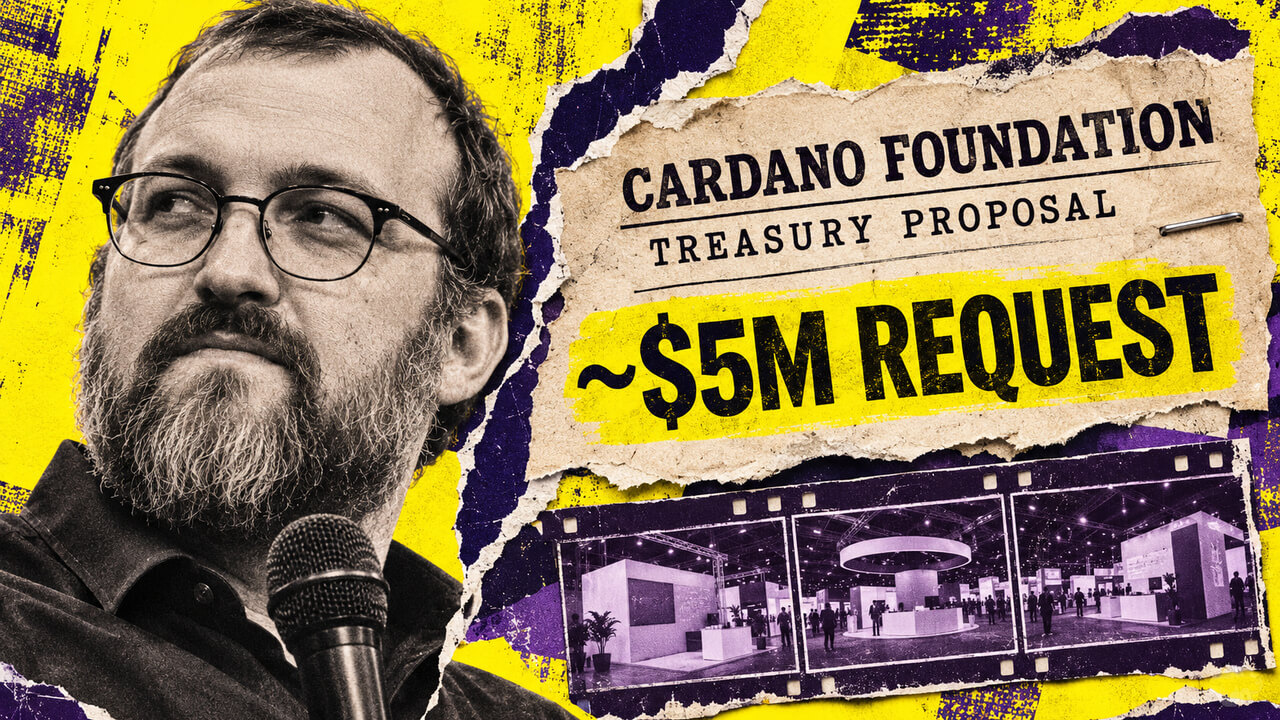
Cardano Foundation CEO Frederik Gregaard defended the blockchain's future as his organization sought nearly 25 million ADA to promote adoption.
In a Nov. 15 statement, Gregaard argued that Cardano had become technologically stronger and more decentralized, pushing back against growing concerns about the network's future following controversial remarks by founder Charles Hoskinson.
The comments followed a backlash against Hoskinson's declaration that Cardano's original development roadmap was complete, with some investors questioning whether the network had delivered on its broader ambitions.
Hoskinson later clarified that he meant the completion of Cardano's original engineering roadmap, not that development or his involvement with the ecosystem had ended.
However, Gregaard argued that Cardano's future should not depend on any single individual or organization. He said:
“Decentralization means that no single individual gets to decide when Cardano is finished.”
Cardano's technological progress faces an adoption test
Gregaard pointed to several developments he believes have strengthened Cardano's competitive position, including decentralized governance, alternative node implementations and new infrastructure for financial institutions.
He highlighted Amaru and Dingo, alternative implementations of Cardano's blockchain software written in Rust and Go, respectively, as advances that could reduce reliance on a single technology stack.
The executive also cited the introduction of ADA futures on CME Group and the launch of CIP-0113, a programmable token standard designed to support regulated financial assets.
According to Gregaard, the new standard has already enabled the tokenization of 850,000 shares in Veridian, a Swiss company spun out of the Cardano Foundation, structured as legally recognized securities under Swiss law.
The development lets companies embed compliance requirements, investor eligibility, and transfer restrictions directly into blockchain-based assets.
Gregaard believes these capabilities could position Cardano to compete in the growing market for tokenized stocks, bonds and other traditional financial instruments. He said:
“The Cardano I see today is fundamentally stronger, more decentralized, and more capable than the Cardano I came into over five years ago.”
However, the executive also acknowledged that technological progress alone would not determine Cardano's long-term success. Gregaard said:
“Of course, we need to translate more of these initiatives into production deployments, recurring transactions and sustainable economic activity.”
He added that Cardano needs to become more competitive, even as he defended the progress made across its ecosystem.
That challenge has become particularly relevant as the Foundation seeks additional community funding to expand Cardano's presence at major industry events.
Foundation seeks 25 million ADA to expand adoption efforts
On Nov. 16, the Cardano Foundation submitted a governance proposal requesting 24,995,775 ADA from the network's community treasury.
The request carries an estimated value of nearly $5 million based on an assumed ADA price of $0.20 and would finance Cardano's participation in 12 international conferences throughout 2027.
The proposed spending includes approximately $2 million for sponsorships, $1 million for exhibition infrastructure and $702,000 for travel support. Another $695,000 would finance accompanying events, including four hackathons.
The Foundation argued that coordinated participation in industry conferences gives Cardano developers access to businesses, investors and regulators they might otherwise struggle to reach.
It cited results from its previous events program, which generated 8,191 booth contacts, engaged 1,169 developers and initiated discussions around 219 potential collaborations between August 2025 and July 2026.
The program also supported 79 ecosystem projects and generated 1,045 Cardano wallet registrations, according to the Foundation.
However, the latest proposal highlights the distinction between attracting industry interest and establishing sustainable blockchain activity.
Its 2027 targets include 9,520 booth contacts, 955 developers, and 184 potential collaborations. While the Foundation also promises to track on-chain transactions generated through event contacts, the proposal sets no numerical target for that activity.
What Cardano’s 25 million ADA events proposal would measure
The Foundation seeks 24,995,775 ADA for 12 conferences in 2027. Its proposed budget is $4,999,155 at an assumed $0.20 per ADA.
The Foundation sets numerical outreach targets and plans to track transactions from event leads without setting a transaction target.
The spending plan and 2027 targets depend on proposal approval and delivery. The previous program and proposed program differ in event scope. The $0.20 ADA price is a budgeting assumption.
Sources
Supporting facts
- The Nov. 16 proposal requests 24,995,775 ADA, equivalent to $4,999,155 at the proposal’s $0.20 per ADA assumption, for 12 conferences in 2027 with side events including four hackathons. [1] [2]
- The proposed USD budget assigns $1,989,000 to sponsorships, $1,060,000 to booth build and audiovisual equipment, $702,000 to travel, $695,000 to side events and hackathons, and $553,155 in total to merchandise, partner fees, audit, taxes and other fees. [1] [2]
- For August 2025 to July 2026 the Foundation reported 8,191 booth contacts, 1,169 developers engaged, 219 collaborations in discussion, and 1,045 wallet sign-ups. [1]
- For 2027 the Foundation targets 9,520 booth contacts, 955 developers engaged, 184 collaborations initiated or in discussion, and 910 wallet sign-ups. [1]
- The proposal says the Foundation will track and report post-event on-chain transactions attributable to event leads. The proposal lists no numerical target for those transactions. [1]
Method
Budget bars use a common $2 million scale and exact proposal inputs. Other costs add merchandise ($82,000), local partners ($233,100), and audit, taxes and other fees ($238,055), totaling $553,155, displayed to the nearest $1,000.
Scope
The spending plan and 2027 targets depend on proposal approval and delivery. The previous program and proposed program differ in event scope. The $0.20 ADA price is a budgeting assumption.
 CryptoSlate
The organization has committed to publishing spending reports, monitoring performance through a public dashboard, and returning unused funds to the treasury.
The proposal also acknowledges financial risks associated with ADA's price. Should the token fall below the assumed $0.20 valuation, the Foundation says it would reduce or cancel planned activities rather than exceed its funding allocation.
The funding request is now before Cardano's delegated representatives, who have until Dec. 20 to vote on whether to approve the withdrawal.
Their decision will determine whether the Foundation secures another year of treasury-backed international outreach as it attempts to translate Cardano's technological progress into more measurable economic adoption.
Mentioned in this article

Editorial credits

Oluwapelumi values Bitcoin's potential. He imparts insights on a range of topics like DeFi, hacks, mining and culture, underlining transformative power.