Blast to wind down Ethereum L2 after costs outpace revenue

 Written by Nate Kostarstaff writerReviewed by Sam Bourgistaff writer
Once among Ethereum’s largest layer-2 networks by total value locked, Blast is urging users to move their assets to mainnet ahead of the shutdown.
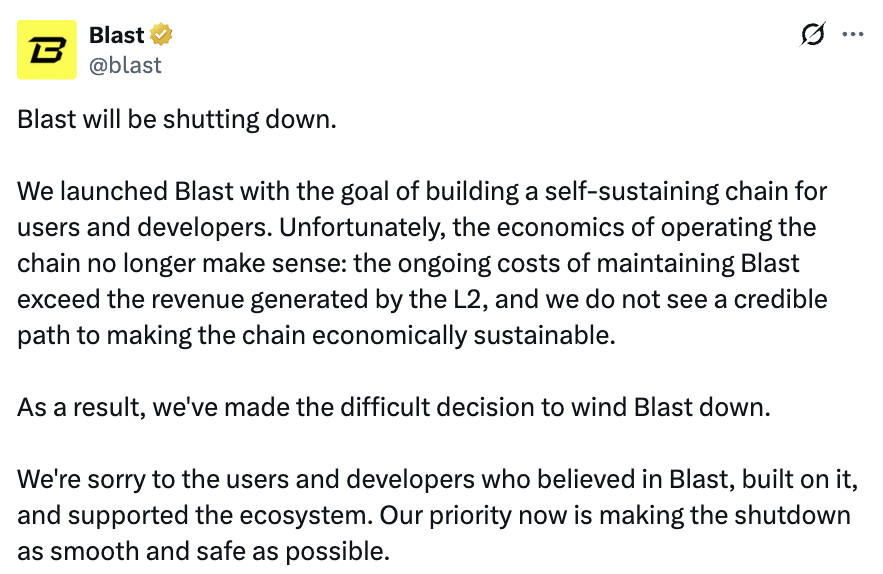
Ethereum layer-2 network Blast is shutting down after its operating costs exceeded the revenue generated by the chain.
In a Friday post on X, Blast said it sees no “credible path” to making the network economically sustainable and asked users to withdraw their assets to Ethereum mainnet.
“We launched Blast with the goal of building a self-sustaining chain for users and developers,” the team said. “Unfortunately, the economics of operating the chain no longer make sense.”
Source: Blast
The network will reduce its withdrawal delay to 24 hours, though withdrawals will be temporarily unavailable while Blast unwinds its Lido assets, a process expected to take about a week.
Users will have until Oct. 26 to withdraw through Blast’s interface. After that, assets will remain accessible, but withdrawals will require users to interact directly with the Blast bridge contracts on Ethereum.
Blast said it will publish instructions for withdrawing directly through the bridge contracts ahead of the Oct. 26 cutoff and urged users to move their assets to Ethereum mainnet before then.
Related: Stablecoins can drain from banks and nations at lightning speed
Blast emerged from Blur’s NFT boom
Blast was founded by Tieshun “Pacman” Roquerre, the founder of NFT marketplace Blur, which launched in October 2022 and quickly challenged OpenSea by targeting professional traders with token incentives. By the end of 2022, Blur had surpassed then-leading NFT marketplace OpenSea in trading volume and extended its lead in early 2023, fueled in part by its token airdrop and trader rewards.
Roquerre unveiled Blast in November 2023 with native yield on Ether (ETH) and stablecoins and a points program tied to an anticipated token airdrop. The strategy helped attract more than $2 billion in deposits before its mainnet launched in February 2024.
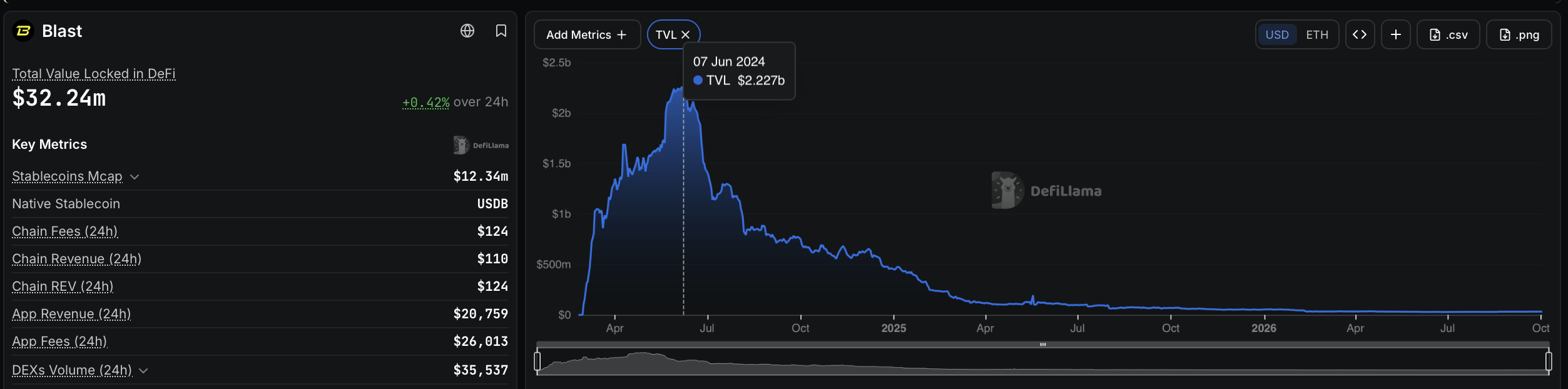
Blast’s DeFi TVL has fallen more than 98% since its June 2024 peak. Source: DefiLlama
However, Blast’s growth proved difficult to sustain amid a broader downturn in the NFT market. Its DeFi total value locked has declined steadily since peaking at roughly $2.2 billion in June 2024, falling by more than 98% since then, according to DeFiLlama data.
Blur has undergone a similar decline. Its total value locked, which rose above $200 million at its early-2024 peak, now stands at about $27 million.
Magazine: Furious debate about THORChain vs NEAR shows idealism has limits


Subscribe to daily byte-sized crypto news from Cointelegraph
More on the subject