Bitcoin traders bet borrowed money on a rally as oil surges ahead of Friday’s inflation test
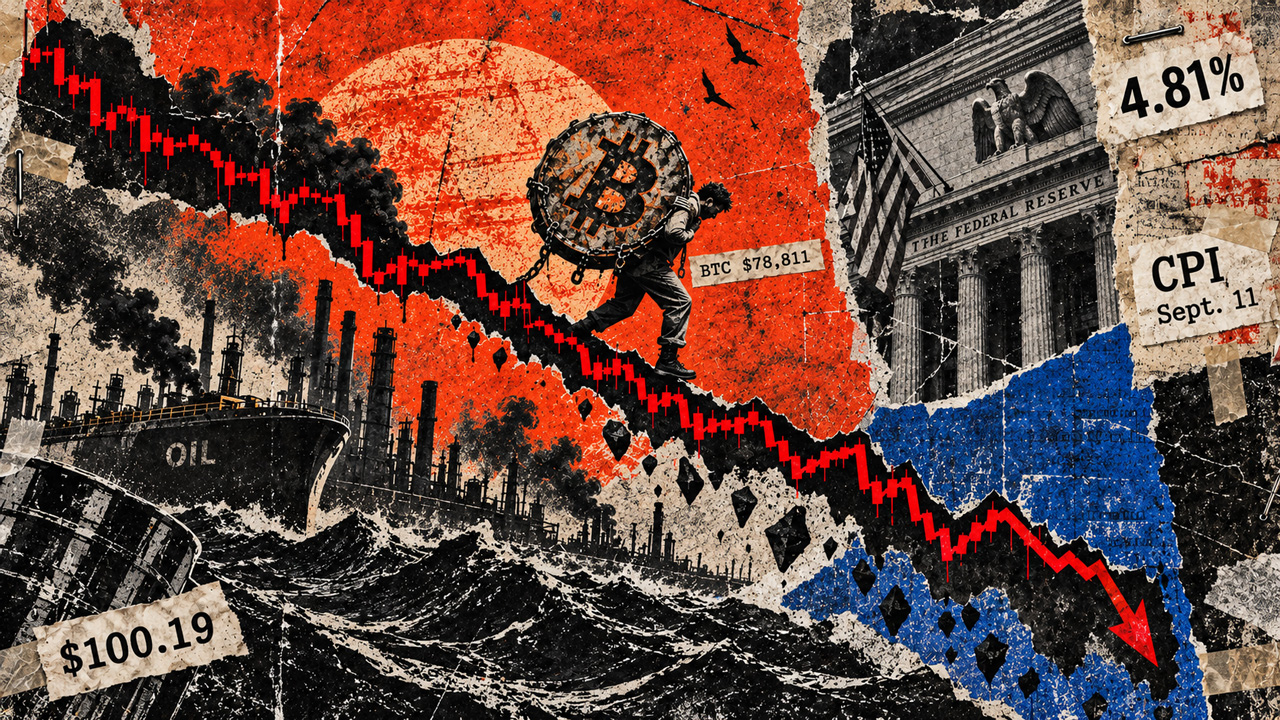
Bitcoin is holding above $78,000 as Brent crude breached $100 and rising Treasury yields revived inflation fears.
Data from CryptoSlate showed the flagship cryptocurrency trading around $78,451 at press time, with little sign of the pressure spreading across bond and energy markets after an escalation in the Middle East pushed Brent above the threshold for the first time since July 24.
Brent touched $100.19 before easing slightly, extending a roughly 25% advance since early August as attacks on shipping and energy infrastructure raised fresh concerns about supplies through the Strait of Hormuz and Red Sea. The US 10-year Treasury yield climbed toward 4.81% as investors weighed the inflationary consequences of another surge in energy costs.
Mohamed El-Erian, the chief economic advisor at Allianz, said Brent's move above $100 has sharpened focus on the economic, political and social consequences of higher US gasoline prices. He also pointed to the accompanying rise in bond yields.
That combination has historically been difficult for Bitcoin. Higher oil prices can reinforce inflation, reduce the Federal Reserve's room to ease and push real yields higher, increasing the relative appeal of interest-bearing assets over Bitcoin.
Markets were pricing a 60.4% probability of a quarter-point Fed increase at next week's meeting, up from roughly even odds before last week's stronger-than-expected employment report.
Bitcoin's ability to remain above $78,000 despite those conditions is now providing a live test of evidence that its relationship with traditional markets has begun to change.
Bitcoin's gold correlation gets a live test
In a research note shared with CryptoSlate, Talos noted that Bitcoin's 90-day correlation with gold had risen to 0.56, its highest since 2020, while correlations with the Nasdaq 100 and the US dollar had fallen close to zero.
That combination has previously appeared during periods when Bitcoin traded more closely with scarce monetary assets than technology stocks, with concerns over sovereign debt, currency purchasing power and real interest rates becoming larger drivers of price behavior.
The current environment, however, carries a complication absent from some previous Bitcoin-gold regimes.
Real yields remain elevated, limiting the Fed's ability to respond to economic weakness with aggressive easing. Talos identified higher rates as one of the main threats to Bitcoin's emerging gold-like trading pattern, leaving the asset exposed when incoming data forces investors to price in tighter monetary policy.
Indeed, Bitcoin showed that sensitivity only five days ago.
BTC fell 2.32% in the 30 minutes following the Sept. 4 payrolls release after the US economy added 162,000 jobs, compared with expectations for 56,000. Talos said the move was about six times Bitcoin's typical 30-minute reaction around payroll reports.
Open interest fell 3% during the same period, while $119 million of long positions were liquidated against $24 million of shorts, showing how derivatives positioning can amplify a macro catalyst.
The latest oil surge is creating pressure through the other side of the Fed's mandate.
Energy prices were already feeding into inflation elsewhere before Brent crossed $100. China's August producer prices rose 3.8% from a year earlier, with higher international crude prices among the major contributors, offering an early example of how the Middle East shock is spreading through production costs.
The danger increases if shipping disruptions worsen. Goldman Sachs has said crude could climb as high as $120 a barrel if attacks on Middle Eastern vessels broaden, compared with a potential retreat toward $80 if regional exports normalize.
André Dragosch, Bitwise Europe's head of research, also sees a potential bond-market transmission channel. He said renewed Chinese oil purchases could keep crude prices elevated, increasing Japan's import bill and pressure on the yen. That, in turn, could increase pressure on Japanese investors to reduce Treasury holdings as authorities seek to stabilize the currency.
Japan's exposure is already drawing attention as the yen strengthens and speculation grows over repatriation from overseas assets. US officials have also become increasingly active in supporting the currency, partly amid concerns that Japan could otherwise sell US bonds to defend it.
For Bitcoin, the result would be another source of upward pressure on yields, which Talos says remain one of its key macro vulnerabilities.
CPI could expose increasingly crowded longs
Bitcoin's resistance to the oil shock could face a more immediate challenge Friday when the US releases August consumer inflation data.
The Consumer Price Index is scheduled for 8:30 a.m. ET on Sept. 11, just days before Fed officials begin their Sept. 15-16 policy meeting. Core inflation is expected to ease to 2.4% annually from 2.5% in July.
Friday's report will largely predate Brent's latest jump above $100, meaning it will not capture most of the current energy shock. Its immediate effect will instead come through rate expectations.
Fed Gov. Christopher Waller said last week he would be inclined to leave rates unchanged if August inflation shows continued cooling, while an upside surprise could lead him to support another increase.
Talos found that core CPI releases have generated Bitcoin moves about 1.8 times larger than ordinary 30-minute trading windows since January 2025, with effects that tend to persist longer than reactions to employment reports.
The risk is compounded by Bitcoin's own derivatives market.
Alphractal CEO Joao Wedson said leverage has built up again, though it remains below some previous extremes, with most current positions tilted long. That leaves the market vulnerable to another liquidation wave if CPI, oil or Treasury yields produce a sufficiently large downside move.
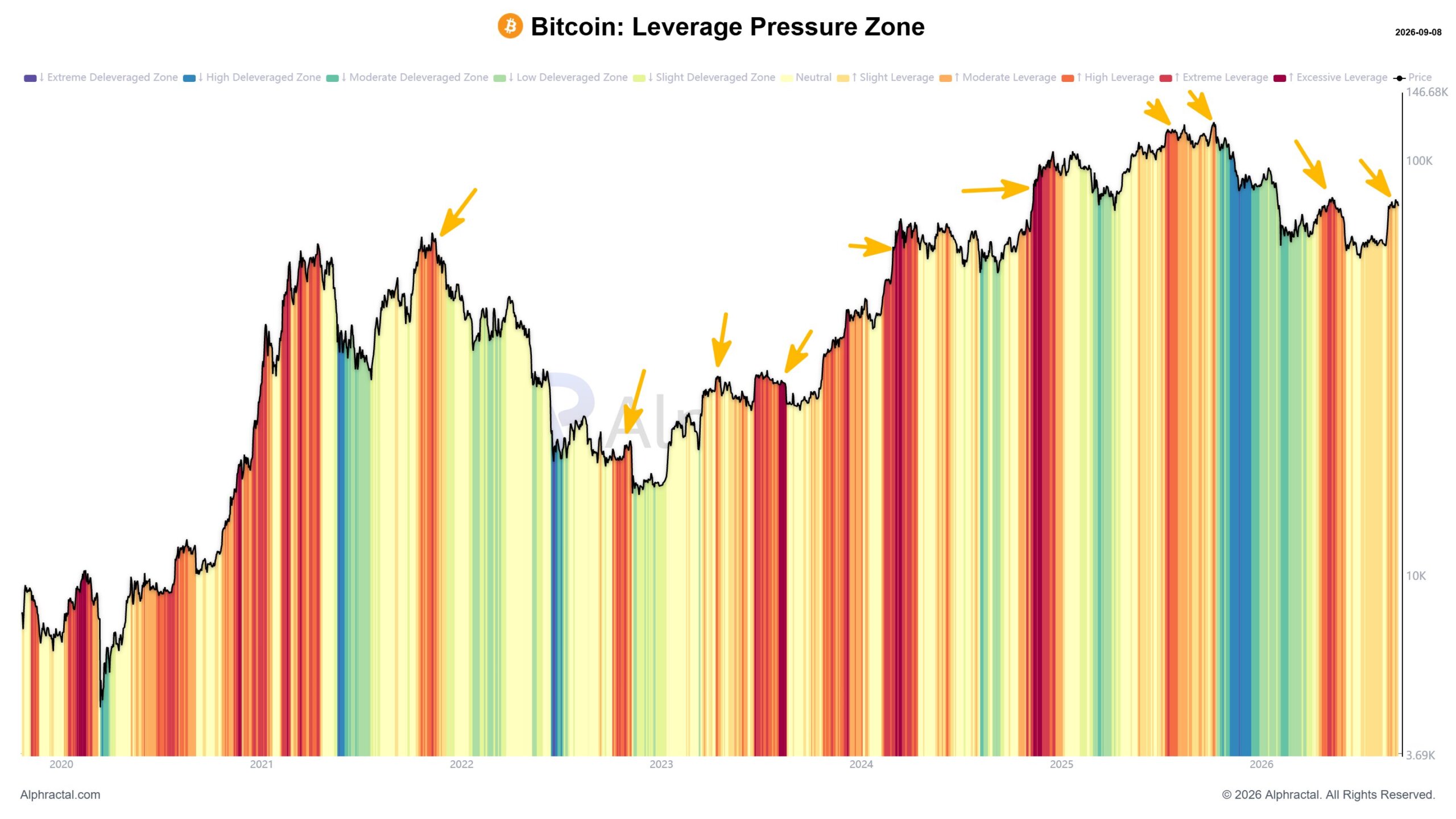
Bitcoin has so far absorbed Brent above $100, a 10-year Treasury yield near 4.8% and growing expectations for another Fed increase without surrendering the upper-$70,000 range.
Friday's inflation report now offers a harder test. A cooler reading could relieve some of the rate pressure accompanying the oil shock. An upside surprise would force Bitcoin to defend that resilience while yields rise and an increasingly leveraged group of traders is positioned for the price to move the other way.