Bitcoin plunges to $71k as Jensen Huang abruptly resigns sending Nvidia into $2 trillion wipeout
Quick Take
- Nvidia CEO Jensen Huang resigned abruptly, sending shares down 10% and extending a nearly $2 trillion decline from the company's October peak.
- Bitcoin fell below $72,000 and Ethereum slipped under $2,000 as the leadership crisis intensified selling across risk-sensitive assets.
- Huang's departure raises questions about whether Nvidia's next CEO can sustain the financing arrangements underpinning the AI boom.

Nvidia co-founder Jensen Huang resigned Thursday, sending the chipmaker's shares tumbling and intensifying a selloff across cryptocurrency markets.
On Nov. 12, the company announced that Huang had stepped down as chief executive, president, and board member, effective immediately, ending his 33-year leadership of the artificial intelligence giant.
Chief Financial Officer Colette Kress was appointed interim CEO while Nvidia searches for a permanent replacement. Harvey Jones, a longtime director and former Synopsys executive, will serve as board chairman.
The company did not specify a reason for Huang's resignation.
However, the departure had followed reports of Huang's extramarital relationships, including one involving a woman suspected by US authorities of having Chinese intelligence connections. Nvidia's board had launched an independent investigation into the allegations, which remain unproven.
The upheaval triggered a sharp decline in Nvidia shares, which fell as much as 10% in premarket trading to approximately $156.
At that price, the company's implied market capitalization would fall to roughly $3.8 trillion, nearly $2 trillion below its October peak of approximately $5.8 trillion.
Speaking on this performance, CryptoQuant CEO Ki Young Ju noted that:
“[Nvidia stock's] analyst sentiment just hit -2.6σ, the most bearish on record.”
The selling extended to Nvidia-backed AI infrastructure companies. CoreWeave fell more than 13% in premarket trading, while Nebius declined about 20% amid concerns about its growth outlook.
The uncertainty also spilled into cryptocurrency markets, where Bitcoin and Ethereum fell to their lowest price values since August. BTC fell below $71,500, while ETH dropped below $1,990, per CryptoSlate data.
The market reaction reflects Nvidia's central role in the AI investment boom, with Huang overseeing both its dominance in advanced processors and an expanding network of financial arrangements supporting companies that buy them.
Does Huang's exit threaten the AI financing boom?
The leadership crisis has also revived concerns about Nvidia's role in financing the AI infrastructure expansion, particularly the circular investment arrangements connecting chip suppliers, cloud operators and AI developers.
Nic Puckrin, chief executive of Coin Bureau, warned that replacing Huang could backfire on the broader AI industry, citing his central role in negotiating financing agreements.
Puckrin questioned whether a successor could replicate those arrangements and whether uncertainty over Nvidia's direction could undermine confidence in the sector's investment model.
The concerns come amid growing scrutiny of circular financing, with AI companies increasingly funding businesses that also purchase their products and services.
An October study by the Bank for International Settlements found that 55.2% of incoming investment value in AI companies between 2021 and 2025 came from other AI businesses.
Of that AI-to-AI investment value, 46.4% involved companies that also maintained commercial relationships with recipients, equivalent to approximately 25.6% of overall incoming investment value.
Nvidia is among the companies participating in such arrangements. In January, the chipmaker invested $2 billion in CoreWeave, a cloud infrastructure provider that purchases Nvidia processors.
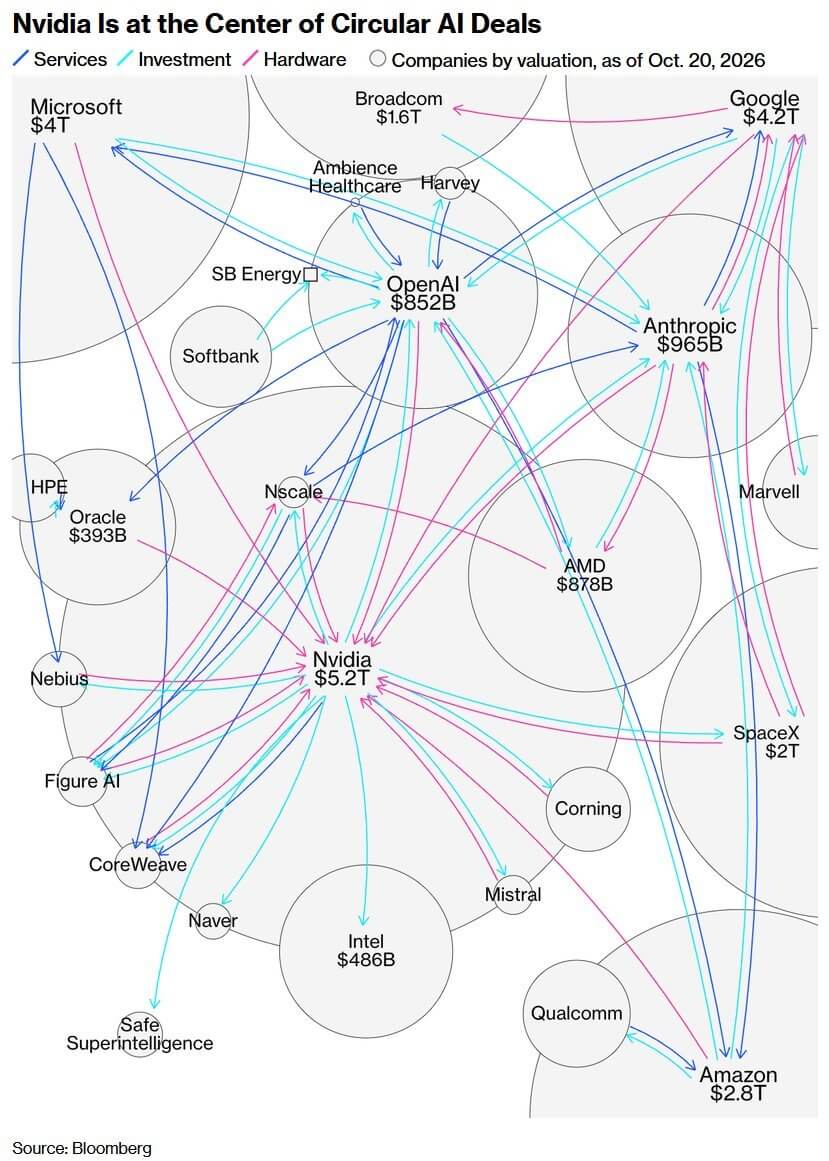
The investment accompanied an agreement to accelerate CoreWeave's development of AI data centers, deepening the financial relationship between Nvidia and one of its major customers.
The arrangements have drawn comparisons to the late-1990s telecommunications boom, when equipment manufacturers financed network operators' purchases of their products. The subsequent collapse in demand exposed suppliers to declining sales and losses on their financing commitments.
Huang's resignation does not alter Nvidia's existing contracts. However, his successor will inherit an increasingly interconnected investment network whose sustainability depends on continued growth in demand for AI computing.
Nvidia's Nov. 17 earnings call will give investors a chance to assess whether the leadership transition changes its approach to financing customers and supporting infrastructure expansion.
Mentioned in this article

Editorial credits

Oluwapelumi values Bitcoin's potential. He imparts insights on a range of topics like DeFi, hacks, mining and culture, underlining transformative power.

Also known as "Akiba," Liam Wright is a reporter, podcast producer, and Editor-in-Chief at CryptoSlate. He believes that decentralized technology has the potential to make…