Bitcoin Lightning developers needed two patches to stop a potentially costly attack
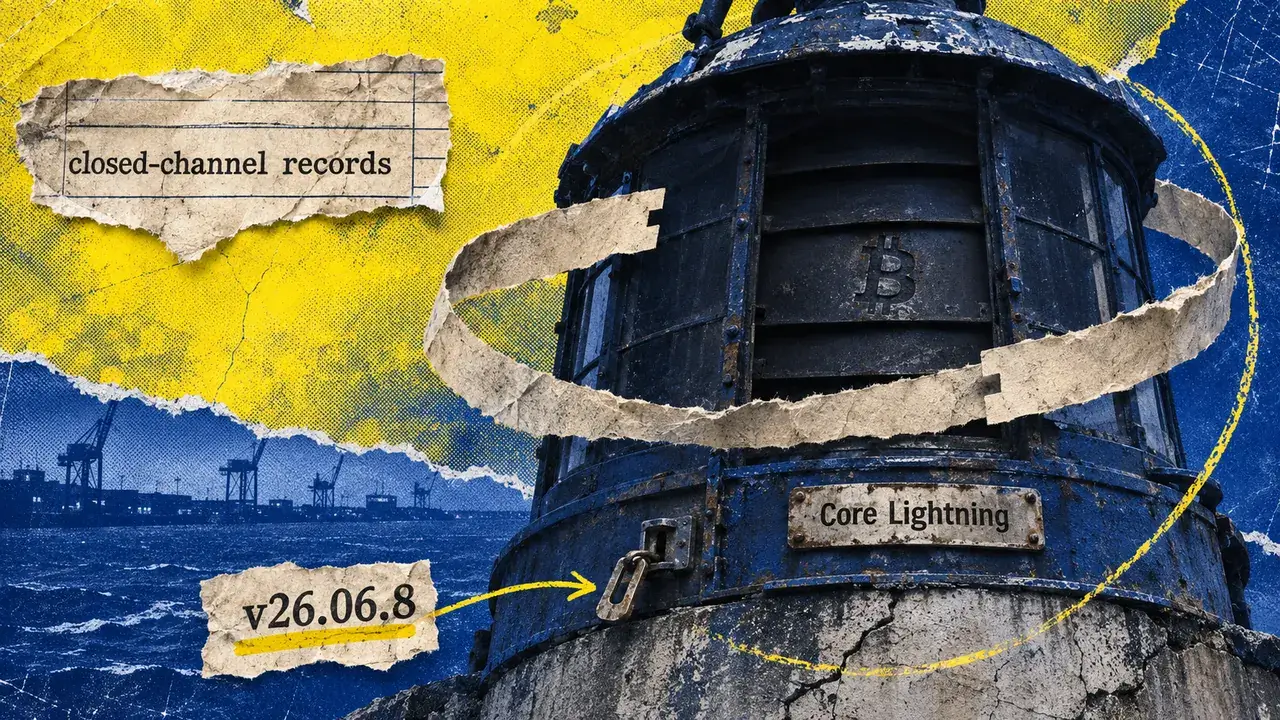
Quick Take
- Core Lightning's first security patch failed to eliminate a vulnerability that could repeatedly crash Bitcoin payment nodes.
- Attackers could exploit duplicate channel identifiers to keep nodes offline, potentially exposing Bitcoin held in unrelated payment channels.
- A second patch closed the remaining attack route in September, but operators running outdated software remain exposed.

Bitcoin's Core Lightning software required two security patches to eliminate a vulnerability that could repeatedly crash payment nodes and potentially expose funds held in other channels.
A Nov. 13 security disclosure revealed that an initial repair released in July failed to address a second attack method that could keep affected nodes offline even after they restarted.
The vulnerability, tracked as LNF-2026-0004, affected Core Lightning, one of the software implementations used to operate nodes on Bitcoin's Lightning Network.
Security researcher Nishant Bansal discovered that attackers could exploit how Core Lightning assigned identifiers to payment channels, creating duplicate records that caused the software to crash.
The weakness originated in the network's channel-opening process, where each payment channel receives an identifier derived from the Bitcoin transaction output that funds it. Core Lightning could accept multiple channels referencing the same funding output, producing identical identifiers that conflicted with assumptions in its internal software.
In the first attack, a malicious peer could create duplicate pending channels and crash a victim's node simply by reconnecting. The attack required no Bitcoin transaction fees because the fraudulent channels did not need on-chain funding. Each subsequent reconnection could trigger another crash, allowing attackers to repeatedly interrupt payment processing.
However, researchers identified a more persistent variation involving previously closed channels.
By reusing an identifier associated with a closed channel and subsequently closing another channel with the same identifier, attackers could trigger a software failure that persisted across restarts.
Unlike the initial attack, this method required on-chain transaction fees but could leave the node unable to recover without a software upgrade.
Why Core Lightning's first security patch failed
Core Lightning developers addressed the original vulnerability in version 26.06.6, released on July 22, after researchers privately reported the reconnection attack earlier that month.
The update prevented new channels from reusing funding outputs associated with existing live channels. It also modified connection handling to prevent duplicate records already stored from triggering the original crash.
However, the protection did not extend to identifiers associated with closed channels, leaving the second attack route available.
Researcher Crypt-iQ independently identified the remaining weakness, prompting developers to introduce broader safeguards in version 26.06.8, released Sept. 22.
The second update expanded duplicate-identifier checks across active and closed channels belonging to different peers. It also allowed nodes containing previously stored duplicate records to recover without repeatedly crashing.
One reused output. A fix that missed closed channels.
July’s repair checked live channels. September’s also covered closed channels and allowed recovery from duplicates already stored.
Explore the two repairs
The first fix blocked outpoints reused among that peer’s live channels and handled reconnect duplicates. Closed-channel collisions could still cause a persistent restart loop.
Operators should upgrade to the latest release to prevent collisions and handle stored duplicates.
The closed-channel loop shown is the documented persistent path; a separate free nonpersistent path also existed. This qualitative schematic does not show exploitation, losses or affected-node counts.
Sources
Supporting facts
- In the described v1 channel-opening flow, a peer could reuse a funding outpoint, the transaction output funding a channel, causing two channels to receive the same channel_id because that identifier is derived from the outpoint. [1] [5]
- The reconnect variant lets an attacker use unfunded pending channels without on-chain cost and crash the node repeatedly by reconnecting after each restart. [1]
- The advisory's persistent closed-channel variant costs on-chain fees and causes the node to crash again on restart without further attacker action; Crypt-iQ separately described a free nonpersistent path to the closed-channel assertion. [1] [6]
- The first repair, merged July 16 as PR #9318 and released in v26.06.6 on July 22, rejected a reused outpoint among that peer's live channels and replaced the reconnect assertion with defensive handling of already-stored duplicates. [1] [2] [5]
- The first fix left closed-channel reuse possible because its outpoint lookup covered only the peer's live channels. [1]
- The September 22 v26.06.8 repair checks channel identifiers across every peer's live and closed channels, applies the check to funder and dual-funding paths too, and allows duplicates in the closed-channel map so already-stored duplicates can load and close. [1] [3]
- The advisory and Delving disclosure recommend the latest Core Lightning release rather than stopping at v26.06.8; GitHub's latest release was v26.06.10 when checked November 17, and its maintainers strongly encourage upgrading as soon as practical. [1] [6] [4]
Method
Qualitative schematic of the common collision mechanism and two historical patch scopes. Toggle compares July 22 v26.06.6 with September 22 v26.06.8. Connectors show software paths, not counts, timing or money flows.
Scope
The closed-channel loop shown is the documented persistent path; a separate free nonpersistent path also existed. This qualitative schematic does not show exploitation, losses or affected-node counts.
 CryptoSlate
The potential financial consequences extended beyond disrupted Lightning payments.
According to the advisory, nodes forced offline could lose the ability to monitor Bitcoin's blockchain for attempts to settle channels using revoked transaction states.
That could allow dishonest counterparties to claim funds using outdated channel balances. Offline nodes could also miss deadlines for collecting time-sensitive payments, placing Bitcoin held in unrelated channels at risk.
The researchers did not report confirmed exploitation or financial losses.
The findings affect Core Lightning versions preceding the complete September repair, with the reconnection vulnerability dating back to version 0.12.0 and the persistent closed-channel crash introduced in version 25.05.
Developers have since released additional security updates, including version 26.06.10, which addresses other vulnerabilities involving channel operations, payment resolution, and remote crashes.
Core Lightning's maintainers have urged operators to upgrade to the latest release to protect their nodes against the disclosed weaknesses.
Mentioned in this article

Editorial credits

Oluwapelumi values Bitcoin's potential. He imparts insights on a range of topics like DeFi, hacks, mining and culture, underlining transformative power.