Binance unlocks 20x BlackRock IBIT ETF trades with a weekend catch
Quick Take
- Binance listed IBITUSDT on Nov. 18 with round-the-clock trading and a launch leverage ceiling of 20x.
- When vendor quotes are unavailable on weekends and holidays, the futures order book supplies the index inputs.
- Binance uses its mark price to trigger liquidation, and that price can move while the ETF market is closed.

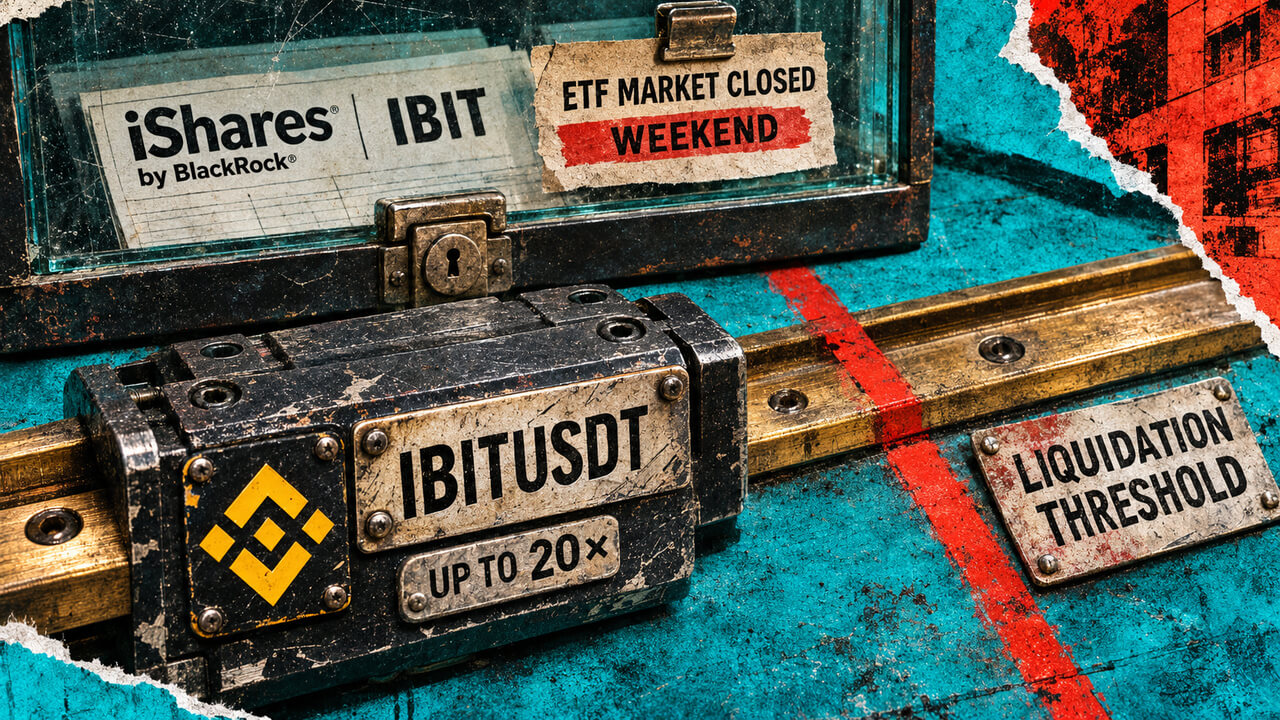
Binance Futures added a perpetual contract tied to BlackRock’s iShares Bitcoin Trust ETF (IBIT) on Nov. 18.
The contract (IBITUSDT) gives eligible traders round-the-clock exposure to the Nasdaq-listed fund, settles in Tether’s USDT, and offered up to 20x leverage at launch.
Binance set the opening for 09:45 UTC in a listing notice, and the exchange’s public futures ticker recorded trades after the scheduled opening. The contract keeps trading after the fund’s market closes, and Binance’s mark price can still move far enough to trigger liquidation.
Traders can take a position on IBIT's rise or fall without owning its shares or Bitcoin, as the fund seeks to reflect Bitcoin's price.
Binance’s TradFi FAQ lists the UK, Hong Kong, Taiwan and some European Economic Area countries as common examples of restricted markets for these products. The 20x figure is the launch ceiling, and Binance’s margin rules set lower leverage ceilings for larger positions.
How Binance prices IBIT exposure after hours
The price index is Binance’s reference for the underlying and helps feed the mark price, the estimate the exchange uses to determine whether a position has reached its liquidation threshold.
During regular equity trading, Binance builds its reference index from third-party price quotes. It smooths those quotes during premarket and after-hours trading, then gives new quotes less weight during the overnight session, according to Binance’s pricing methodology.
On weekends, holidays, and during covered maintenance periods without those quotes, Binance looks to the futures order book, where traders place buy and sell orders for the perpetual.
It averages two measures from that book, the impact bid and impact ask, then smooths the result by giving more weight to recent readings. The index can keep moving while the ETF’s last share price stays where trading left it.
What moves Binance’s IBITUSDT mark price
On weekends, holidays and maintenance windows when vendor quotes are unavailable, Binance uses the futures order book to build its index.
The mark can reach a position’s liquidation threshold while the ETF market is closed.
Shows the documented pricing mechanism. Live prices, exact smoothing settings and position-specific thresholds are outside its scope.
Sources
Supporting facts
- Binance’s regular-hours TradFi equity-perpetual index combines vendor quotes. It smooths those inputs faster in premarket and after-hours sessions and more gradually during the overnight session. [1]
- On weekends, holidays and maintenance periods covered by Binance’s equity-perpetual rules, the reference index uses the midpoint of the futures order book’s impact bid and impact ask and smooths it with a moving average that gives greater weight to recent observations. [1] [2]
- Binance Futures can liquidate a position when its mark price reaches the position’s liquidation threshold. An adverse move in the mark can reduce the margin available to support a leveraged position even when the ETF market is closed. [3] [1] [4]
Method
Uses Binance’s published index regimes for equity-linked perpetuals and its mark-based liquidation rules.
Scope
Shows the documented pricing mechanism. Live prices, exact smoothing settings and position-specific thresholds are outside its scope.
 CryptoSlate
The index feeds the mark, which Binance calculates separately from the latest executed trade.
If an adverse move leaves too little collateral to keep the position open, Binance can forcibly close it while the ETF market is shut. Under Binance’s liquidation rules, the mark triggers that process when it reaches the position’s liquidation threshold.
Binance normally limits the weekend and holiday gap between the mark and the index to 3% in either direction for equity-linked perpetuals and can adjust the limit in extreme conditions.
A trader can be right about where IBIT shares will reopen and still be forced out of the perpetual over the weekend if Binance’s mark crosses the liquidation level first.
Mentioned in this article


Editorial credits

Also known as "Akiba," Liam Wright is a reporter, podcast producer, and Editor-in-Chief at CryptoSlate. He believes that decentralized technology has the potential to make…

Gino Matos is a law school graduate and a seasoned journalist with six years of experience in the crypto industry. His expertise primarily focuses on the Brazilian blockchain…