Anthropic’s Claude builds custom gadget blueprints, but consistency stays hidden
Quick Take
- Anthropic says Claude Fable 5.2 designed three gadgets that Diode engineers built into working prototypes.
- Claude's reported work joined circuit boards, enclosures and firmware, while Diode handled physical assembly and testing.
- Electrical validation and certification remain undone, and the demonstration provides no overall success rate across repeated design attempts.

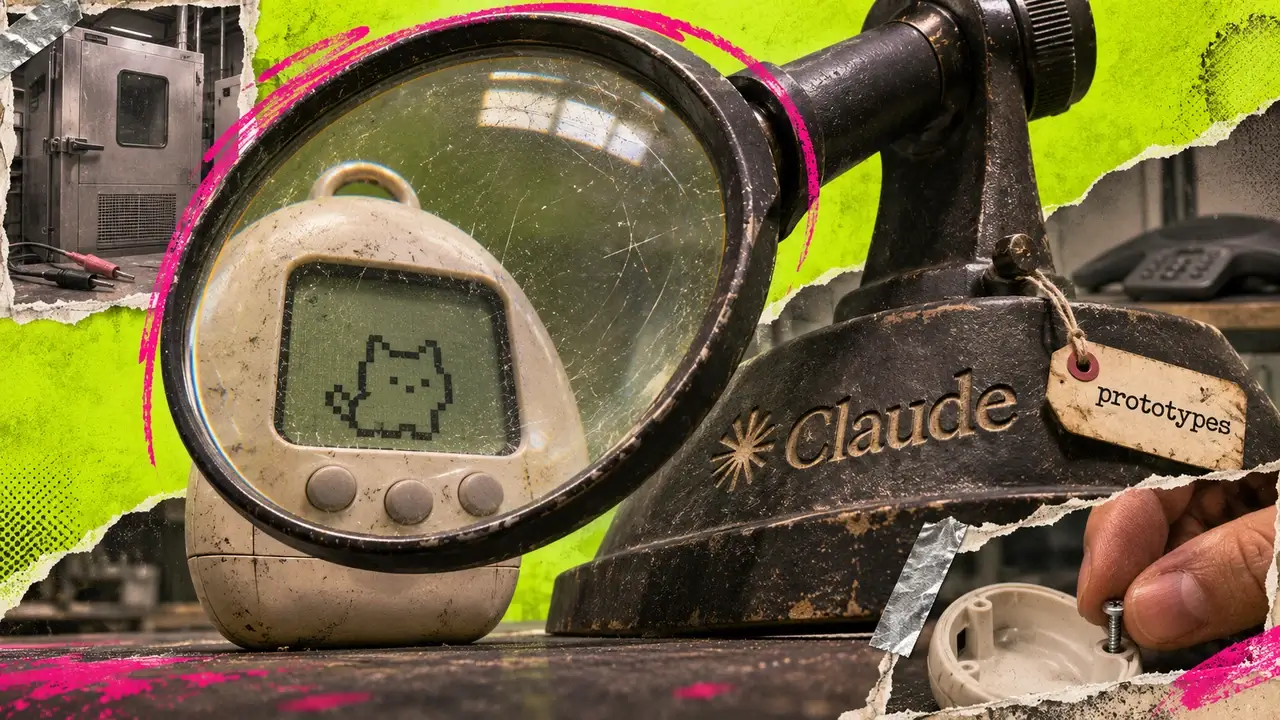
Anthropic says Claude turned short gadget briefs into designs for three working prototypes, coordinating circuit boards, enclosures, and firmware that human engineers then assembled and tested.
In a Nov. 9 research post, Anthropic described a speakerphone, a voice-assistant hub, and a handheld virtual pet designed by Claude Fable 5.2, while Diode Computers built and tested the
For the speakerphone, Anthropic said Claude produced specifications and schematics, placed components on a printed circuit board, routed the copper connections, designed a 3D-printable case, wrote the device's software, and prepared a parts list. The other two devices followed a similar process.
Claude designs. People build and test.
Anthropic reports three working gadgets from linked electronics, enclosure and firmware designs. Diode engineers performed the physical work.
The demonstration joins several design disciplines, while people build and test hardware and commercial readiness remains unresolved.
Company and commercial-partner account. Three working examples do not establish a repeated-attempt success rate. Electrical validation, antenna tuning, thermal testing and certification remain undone; devices were not designed for mass production.
Sources
Supporting facts
- Reported statement Anthropic said in a November 9, 2026 research post that Claude Fable 5.2 designed a speakerphone, a voice-assistant hub and a handheld virtual pet that Diode engineers built into working prototypes. [1]
- Reported statement According to Anthropic, the initial prompts specified a device and its main hardware requirements; Diode also supplied occasional short follow-up directives and a question about battery-free operation. [1]
- Reported statement Anthropic said Claude produced specifications, schematics, circuit-board component placement and copper routing, a 3D-printable enclosure, firmware and a parts list for the speakerphone, and followed a similar process for the other two devices. [1]
- Reported statement Anthropic disclosed a commercial relationship with Diode Computers, whose engineers physically built and tested the prototypes because Claude was not connected to test equipment or board-making and assembly machines. [1]
- Reported statement Anthropic said all three devices remained early prototypes without electrical validation, antenna tuning, thermal testing or certification, and that they were not designed for mass production. [1]
- The November 9 demonstration does not report an overall success rate across repeated end-to-end device-design attempts, so its three examples do not establish how consistently Claude could reproduce the result. [1]
Method
Qualitative handoff diagram from Anthropic's account. Three branches identify design disciplines, then converge into human construction and testing. Device silhouettes are schematic illustrations, not engineering drawings; connector lengths encode no time or performance.
Scope
Company and commercial-partner account. Three working examples do not establish a repeated-attempt success rate. Electrical validation, antenna tuning, thermal testing and certification remain undone; devices were not designed for mass production.
 CryptoSlate
Diode supplied occasional follow-up directives, and an engineer asked whether the virtual pet would operate without a battery. Claude was not connected to test equipment or the machines that make and assemble boards, so people performed the physical construction and testing.
According to Anthropic, Claude checked whether the speakerphone's board would fit inside its case and found that the mute switch would collide with a wall during insertion. It added an assembly step that tilted the board into place.
For the voice-assistant hub, Claude changed the enclosure's shape to shorten microphone ports. It also wrote speakerphone firmware that dimmed the LEDs as audio became louder, keeping the device within the board's designed electrical-current limit, Anthropic said.
Anthropic said Diode manufactured all three boards directly from Claude's design files, without exchanging manufacturing adjustments, and that the prototypes worked without circuitry fixes.
Working prototypes still face product tests
Anthropic said they had not undergone electrical validation, antenna tuning, thermal testing or certification and were not designed for mass production. A functioning prototype still needs substantial engineering work before it becomes a commercially ready product.
The disclosure also provides no overall success rate across repeated end-to-end design attempts. Its three working examples show what the collaborators say they achieved, while leaving unanswered how consistently the process could deliver another usable device.
Anthropic's planned next steps include denser, faster, and more complex boards, simulation checks, and learning from measurements of finished devices. For engineers and hardware builders, that would extend the work from producing a design toward checking how it behaves once built.
Mentioned in this article
Editorial credits

Also known as "Akiba," Liam Wright is a reporter, podcast producer, and Editor-in-Chief at CryptoSlate. He believes that decentralized technology has the potential to make…

Gino Matos is a law school graduate and a seasoned journalist with six years of experience in the crypto industry. His expertise primarily focuses on the Brazilian blockchain…